I've been running outbound for a while now. Lemlist keeps coming up in every conversation about multichannel outreach.
I get why. It was one of the first cold email tools to make personalization at scale feel personal. In 2026, it's repositioned itself as an "AI Outbound Platform" with a new AI campaign builder called lemAgent, a dedicated MCP server for agentic workflows, and Signal Agents that pull buying intent data.
But I kept hearing mixed things. Per-seat pricing that gets ugly at scale. Reporting that reviewers call unusable. Phone data accuracy that misses more than it hits.
So I stopped guessing. I paid $109 for the Multichannel plan, connected a mailbox and my LinkedIn profile, and ran a 14-day test with 500+ outreach touches: roughly 275 emails, 175 LinkedIn actions (visits, connection requests, messages), and 50 calls and SMS tasks. Some of it delivered. Some of it did not.
Here's the honest breakdown.
Let's break it down.
A better alternative worth considering: Salesforge.
Unlimited mailboxes, unlimited LinkedIn senders, flat pricing, and Agent Frank as an autonomous AI SDR.
Lemlist is a sales engagement platform for cold outreach.
You build multichannel sequences across email, LinkedIn, calls, SMS, and WhatsApp inside a single campaign builder.
It handles lead sourcing through a 650M+ contact database, waterfall enrichment for emails and phone numbers, warmup through its native lemwarm engine, reply management inside a unified inbox, and AI-assisted campaign building through lemAgent.
The pitch in 2026 is that Lemlist isn't a cold email tool anymore. It's an AI outbound platform with an MCP server that lets AI agents run the full workflow from a prompt.
That's the marketing. What follows is what I actually found when I used it.
I tested every feature that mattered for a real multichannel outbound motion. Here's what each one actually does for you, and where the gaps are.
This is where Lemlist earns most of its reputation.
You build a sequence and drop in email steps, LinkedIn steps (visits, connection requests, messages, InMails), call tasks, SMS, and WhatsApp actions. Everything sits inside one campaign flow with branching conditions based on prospect behavior.
I built a 6-step sequence in about 12 minutes: two email touches, a LinkedIn visit, a connection request, a LinkedIn message, and a follow-up email. The builder is genuinely good. Drag, drop, condition, done.
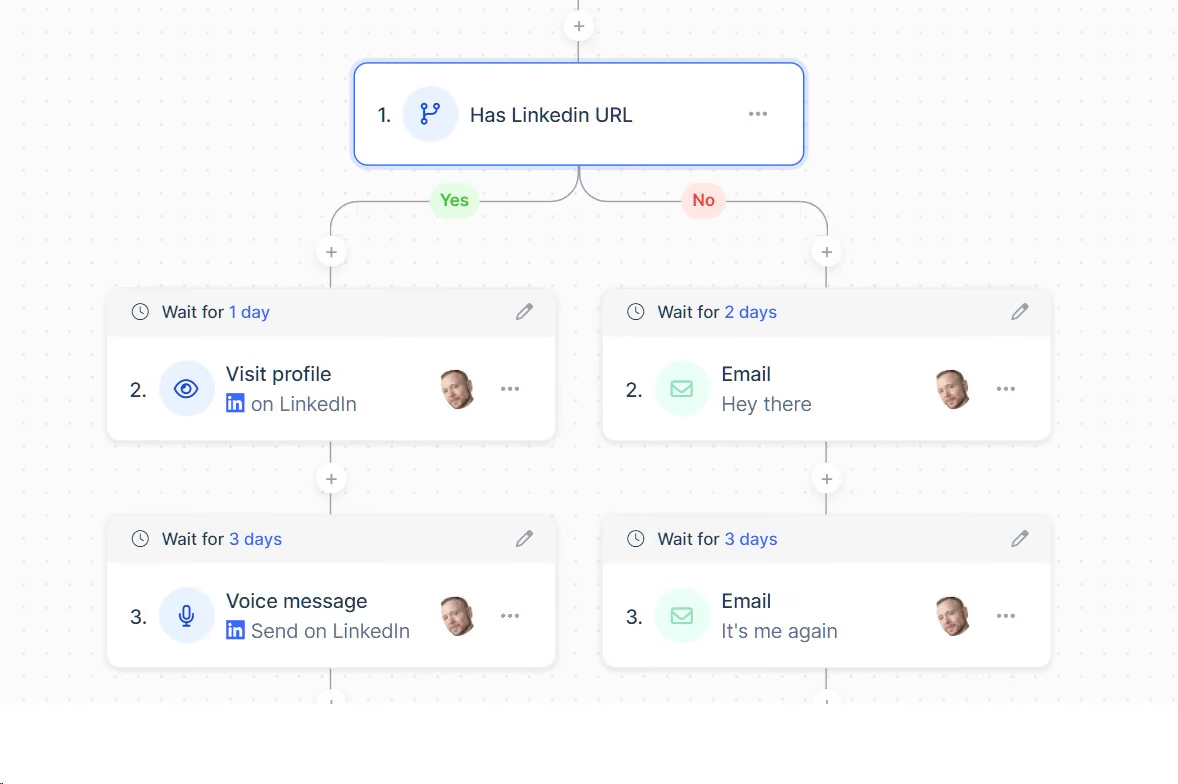
The catch is what's included on which plan. LinkedIn automation, calls, WhatsApp, and SMS are all gated behind the Multichannel plan and above at $109 per user per month. If you're on the Email plan ($69), you get email only.
If you want to see how Lemlist stacks up against other multichannel tools with deliverability protection built in, I broke down the field in this comparison of email outreach tools.
This is Lemlist's newest feature and the one none of the other reviews I read had actually tested.
lemAgent is a conversational AI copilot.
You describe your campaign in natural language ("Build me a 5-step multichannel sequence for SaaS founders in the US targeting sales ops pain points"), and it generates the full sequence with copy, timing, and channel logic.
I tried it three times with different prompts. The first draft was usable but generic. The second was better after I added specifics about my ICP. The third, when I fed it my actual value proposition and a case study, was the closest to something I'd send.
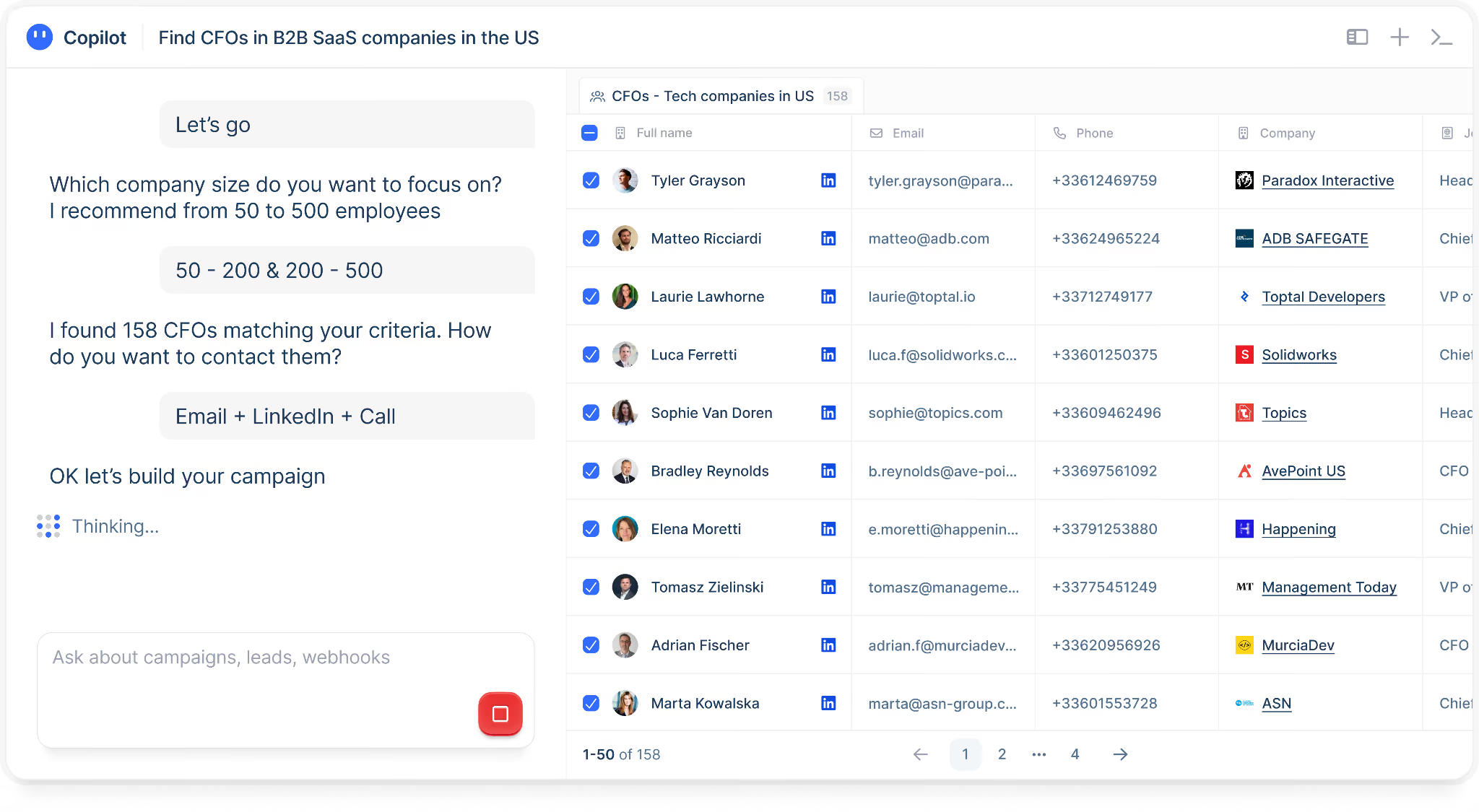
It's not a replacement for a writer who knows your product. It's a speed layer for the first draft. That's a fair use case, and it saves 20 to 30 minutes per campaign build.
I covered how AI campaign builders like this compare across tools in this breakdown of the best AI tools for cold email campaigns.
This is the feature nobody is talking about, and it should be.
Lemlist ships a dedicated MCP (Model Context Protocol) server with 40+ tools. It works with Claude Desktop, Cursor, Windsurf, and any MCP-compatible client.
You give an AI agent access, and it can run the entire outbound workflow from a single prompt: find leads, enrich them, build a sequence, launch it, monitor replies.
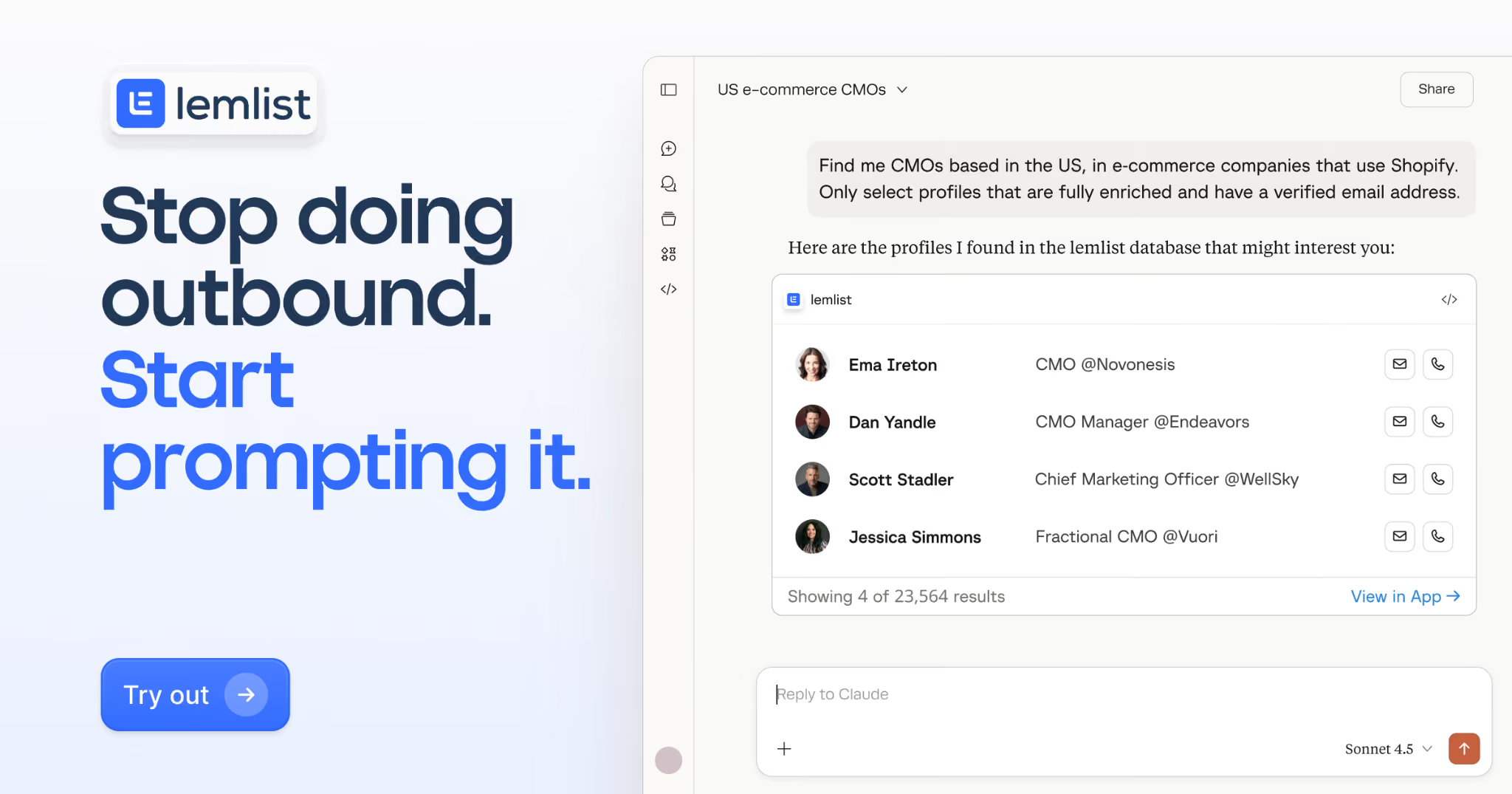
I hooked it up to Claude Desktop, gave it a target ICP, and asked it to draft and launch a 100-prospect campaign end to end. It worked.
Not perfectly, but the fact that it worked at all in September 2026 is genuinely ahead of where most competitors are.
This is Lemlist's real 2026 bet. The strategic direction is agentic outbound, not just cold email. Whether you care about that depends on where you think outbound is heading.
Signal Agents watch for buying intent signals across the web. Job postings, funding announcements, hiring pushes, tech stack changes, LinkedIn engagement.
You set up an Agent, pick your signal type, and it feeds matching contacts into your campaigns. The signals are sold as pay-per-credit add-ons. Site visits cost 20 credits per lead. LinkedIn engagement signals cost 400+ credits per lead.
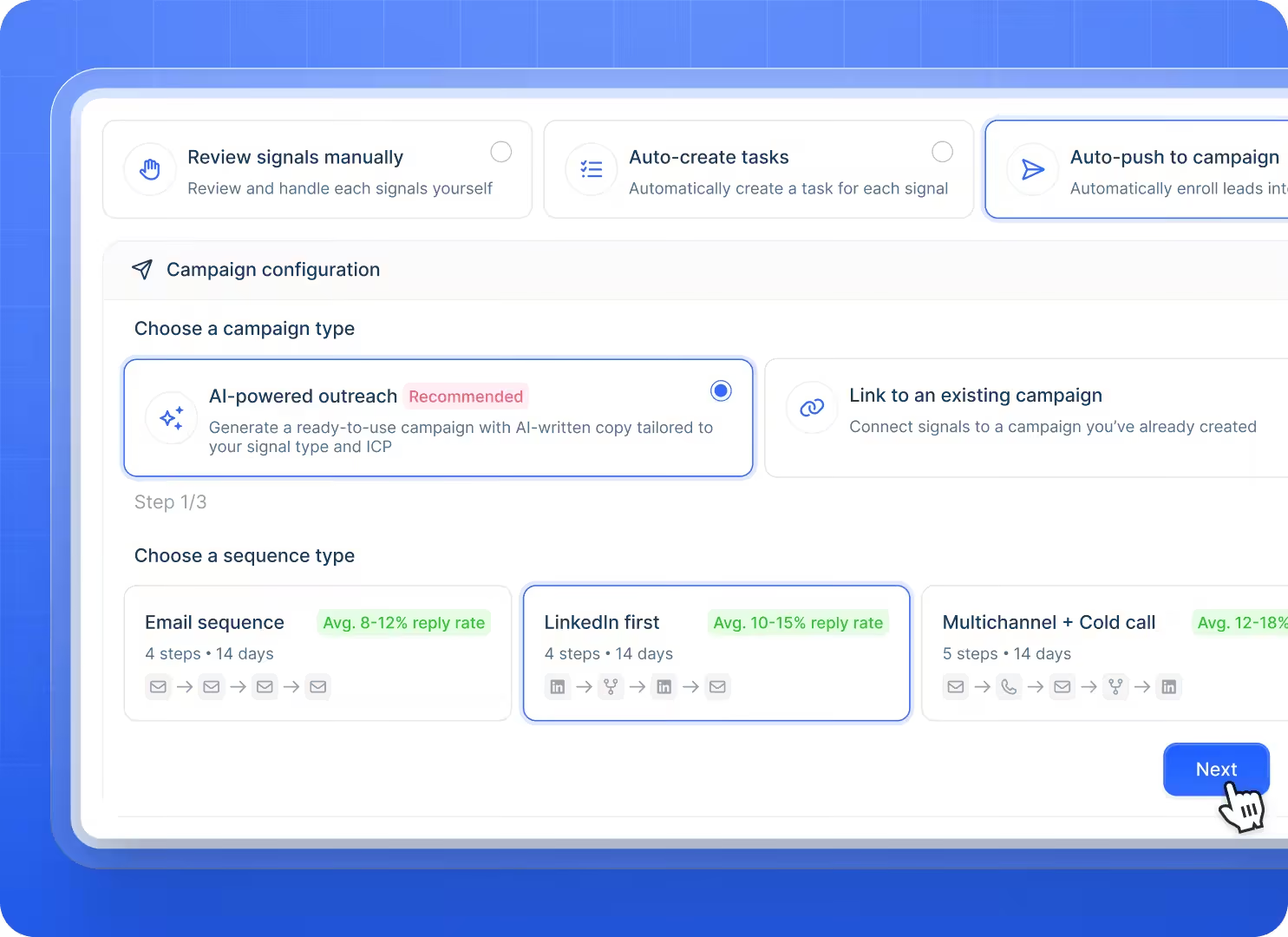
Source: Lemlist
Signal quality was decent for job postings and funding announcements. LinkedIn engagement signals felt looser than the credit price justified. Worth testing before committing budget.
Lemlist's own materials cite 650M contacts. Their vs-Instantly page says 650M. Their self-review blog says 600M+. Third-party teardowns cite anywhere from 450M to 600M.
The exact number is unclear. What's clearer is the enrichment: it pulls from multiple sources in a waterfall, which improves hit rate compared to single-source databases.
I ran 200 test contacts through the finder. Email match rate was around 78%. Phone match rate was closer to 35%, and roughly half of those numbers were direct dials versus switchboards. Phone data is the weakest link. Multiple reviewers on G2 and Capterra flag the same thing.
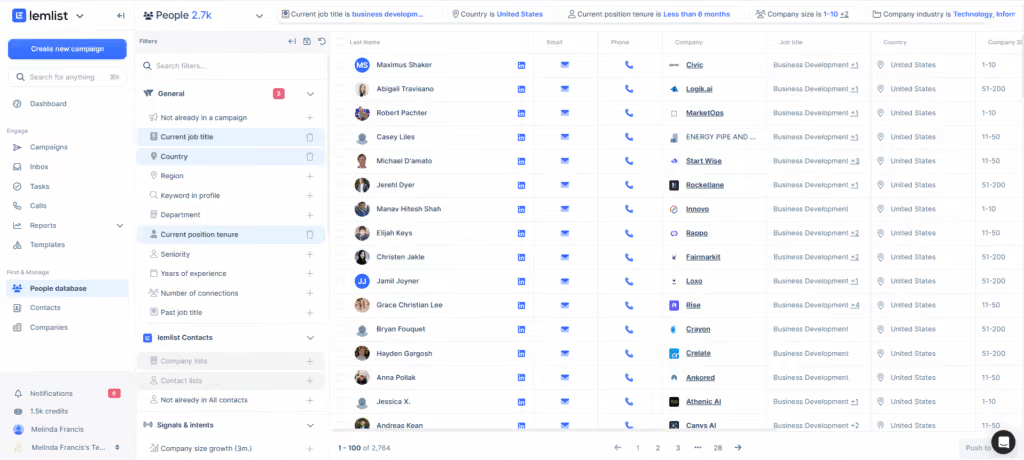
Filtering is solid: location, title, seniority, company size, tech stack. There's a separate 63M+ company database launched in October 2024 that supports lookalikes and account-based search.
Lemwarm is Lemlist's native warmup engine. It's included on every plan and seat, not a separate paid product.
It exchanges emails across a network of 20,000+ real domains in over 100 countries, tracks inbox placement, and auto-pauses when your live campaign is running. The Deliverability Hub sits on top and consolidates warmup data, inbox placement tests, and SPF/DKIM/DMARC checks in one dashboard.
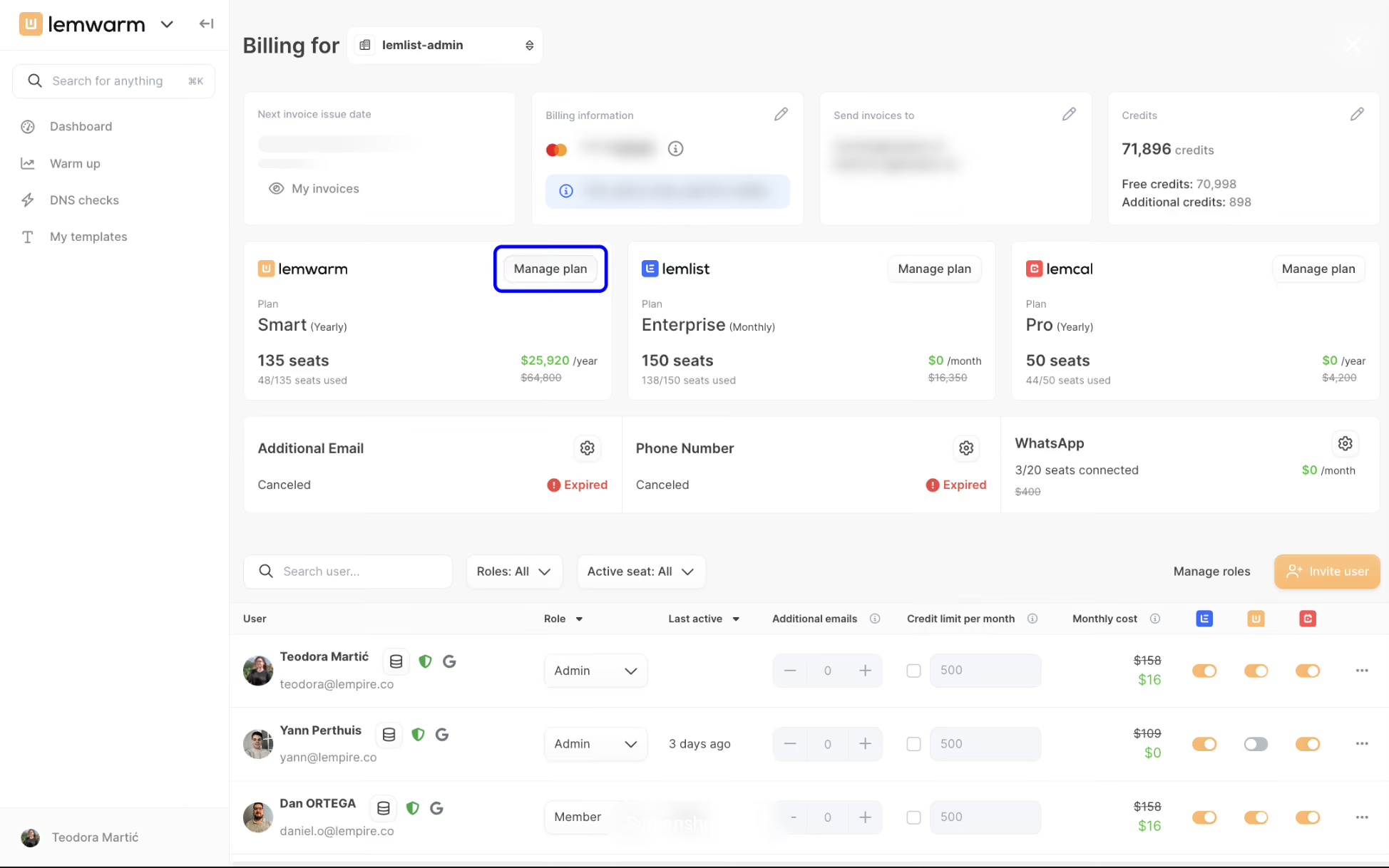
For a bundled deliverability layer, it does the job. Fine if you're already committed to Lemlist and want one less tool to manage. If you want to see how lemwarm actually performs over a 45-day test, I covered it separately in this lemwarm review.
And if you're weighing lemwarm against dedicated deliverability tools, this breakdown of lemwarm alternatives walks through where lemwarm holds up and where it slips.
All replies from every channel landed in one unified inbox during my test. Email, LinkedIn, WhatsApp, SMS.
An AI layer classifies each reply as interested, uninterested, or follow-up needed. Classification accuracy across my 500+ touch campaign was around 80%. Not perfect, but close enough that it saved manual triage time.
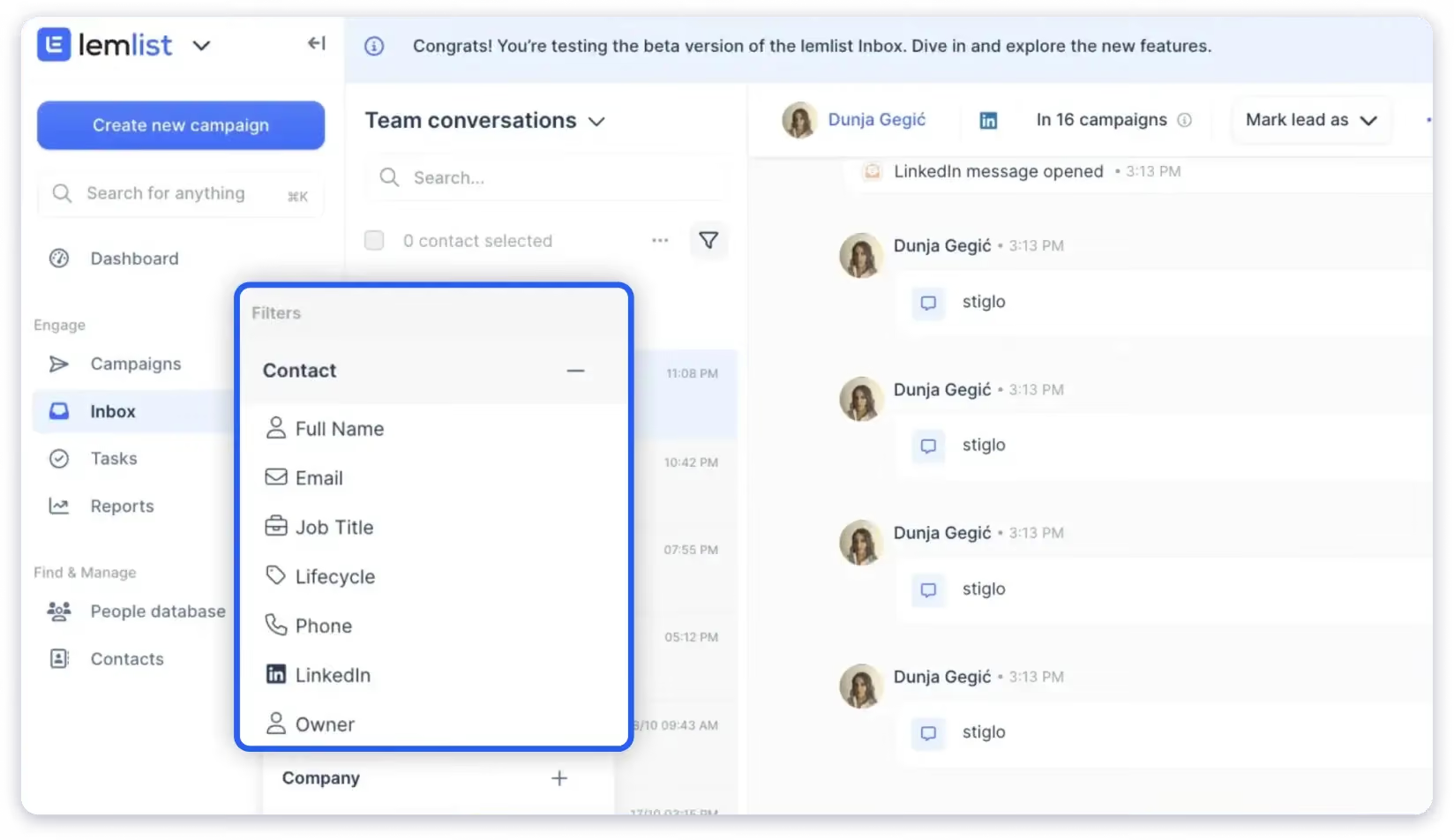
The inbox is clean and fast. No complaints on the UX. It's one of the parts of Lemlist that consistently earns praise across G2 and Capterra reviews.
This is Lemlist's single biggest weakness.
The dashboard shows open rates, click rates, reply rates, and campaign performance widgets. On paper, it's fine. In practice, multiple reviewers report data inconsistencies, false positives on opens and clicks, and difficulty pulling meaningful cohort or attribution reports.
I pulled the analytics for my 500+ touch test twice, 24 hours apart. Numbers shifted. Open rate moved by 4 percentage points. Reply count changed by 3. LinkedIn action counts also drifted between the two pulls. That kind of inconsistency makes it hard to trust the data for real decisions.
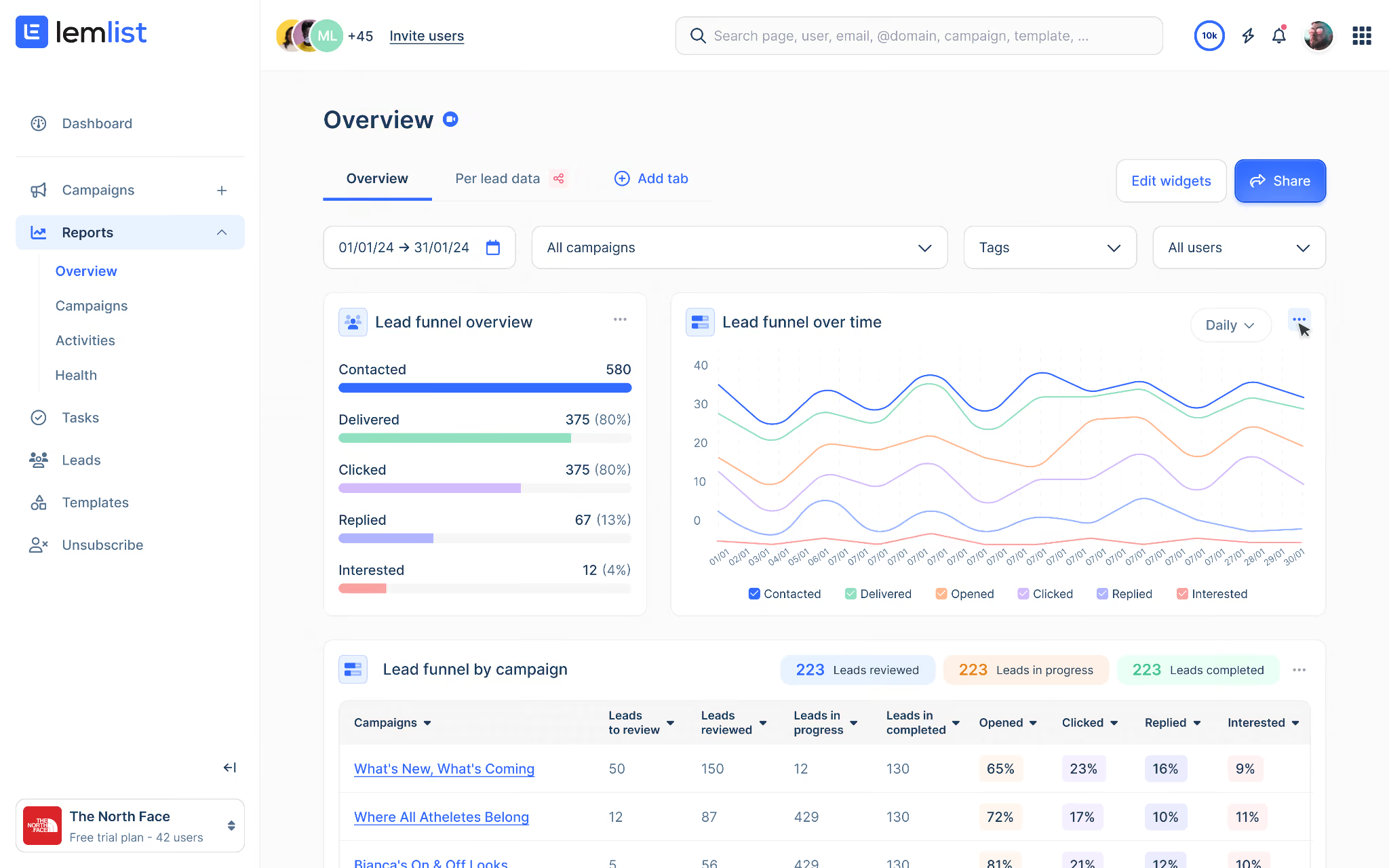
If reporting reliability is core to how your team operates, this is the feature you'll fight with the most. It's the strongest cross-platform complaint in reviews, and it lines up with what I saw myself.
Here's the pricing breakdown as it stands on lemlist.com today. Verify on their live pricing page before committing, because prices shift.
Add-on credits:
Free trial: 14 days on Multichannel access, no credit card required.
Here's the structural cost driver reviewers keep flagging. The Email plan is unlimited users. The Multichannel plan is per user. That means the moment you add a second seat to your Multichannel plan, your bill doubles.
Reviewers also report that Multichannel pricing rose from $87 to $109 per user per month sometime in 2026.
At 5 seats on Multichannel with annual billing, you're at $435 per month before credits. Add phone finder credits for a 500-lead campaign and you're pushing $550+ monthly. That's the math a lot of scaling teams hit and start looking elsewhere.
Ratings across the major review platforms:
Lemlist is a genuinely good tool for the right team.
If you're a solo operator or a 1 to 5 person outbound team, personalization is core to your motion, and you want a single builder that handles email plus LinkedIn plus calls plus SMS plus WhatsApp, Lemlist is one of the better options on the market. The multichannel sequence builder is fast. The unified inbox is clean. lemAgent and the MCP server are legitimately fresh 2026 bets that no other tool I've tested matches.
But if any of the following describe you, Lemlist stops earning its price.
You're scaling past 5 seats and the per-user Multichannel pricing plus credit costs are going to eat your budget. You need reporting you can actually trust for weekly reviews and attribution. You need phone data accuracy and Lemlist is missing more than half your numbers. You want unlimited mailboxes on a flat monthly bill so cost stays predictable as sending volume grows.
For those teams, Salesforge is the better fit.
You get unlimited mailboxes and unlimited LinkedIn senders on every plan. Flat pricing that doesn't multiply per seat. Warmforge warmup bundled free. Primebox™ as the unified reply inbox. And Agent Frank, an autonomous AI SDR who handles prospecting, writing, sending, and follow-ups end to end. If you want the deeper breakdown, I tested Salesforge for 14 days and covered the findings in this Salesforge review.
Is Lemlist worth it in 2026?
Lemlist is worth it if you're a small team (1 to 5 seats) running multichannel outreach where personalization is core. It's less worth it if you're scaling past 5 seats, need reliable reporting, or want flat pricing. For those teams, Salesforge is a stronger fit.
How much does Lemlist cost?
Lemlist offers three plans. Email is $69 per month ($55 annual). Multichannel is $109 per user per month ($87 annual). Enterprise is custom pricing for 5+ users. Add-on credits (email verification, phone finder, intent signals) are billed separately.
Does Lemlist include email warmup?
Yes. Lemwarm is included free on every plan and every seat. It's not sold separately.
What's the difference between Lemlist and Salesforge?
Lemlist charges per user on its Multichannel plan and prices credits separately for phone finder and intent signals. Salesforge gives you unlimited mailboxes and unlimited LinkedIn senders on flat pricing, bundles warmup free, and includes Agent Frank as an autonomous AI SDR. Lemlist is stronger on native LinkedIn features per seat. Salesforge is stronger on cost efficiency at scale and autonomous AI SDR workflows.
Is Lemlist good for LinkedIn outreach?
Lemlist handles LinkedIn actions (visits, connection requests, messages, InMails) inside its multichannel sequences on the Multichannel plan. It's fine as a secondary channel. If LinkedIn is your primary channel, a LinkedIn-first tool will give you more depth on account safety, analytics, and multi-account management.
Does Lemlist have an AI SDR?
Lemlist has lemAgent, an AI campaign builder that generates sequences from natural language prompts, and a dedicated MCP server that lets AI agents run outbound workflows from a prompt. It doesn't have a fully autonomous AI SDR like Agent Frank in Salesforge, which handles prospecting, writing, sending, and follow-ups end to end on Auto-Pilot or Co-Pilot mode.