Lemlist markets itself as an AI outbound platform that runs multichannel outreach for strategic accounts. That works well until you start to scale.
The pricing climbs faster than most teams expect. Per-seat costs and credit consumption pile up once you move past the entry plan. In every review I read, that shift shows up as the top reason teams start shopping around.
Deliverability is the second break point. Reddit threads comparing Lemlist against dedicated high-volume senders keep landing on the same conclusion. Personalization is strong. Inbox placement at real cold email volume is not.
The third break point is product rigidity. You cannot easily edit a sequence once it goes live. Integrations like GoHighLevel and Apify are missing. Support conversations get sluggish once billing enters the picture.
None of these break points is a preference issue on your end. It is a technical mismatch between what Lemlist optimizes for and what a scaling outbound team actually needs to run.
In this blog, I break down the 5 Lemlist alternatives I tested this year. You will get honest pros, honest cons, pricing that reflects the vendor pricing pages today, and a "how to pick" section at the end.
Let's get into it!
Here is the full head-to-head. Every data point reflects the vendor pricing page and G2 profile as of publish. Verify live before you commit.
Before I get into the alternatives, it helps to know what you are actually replacing. These are the five patterns that keep surfacing in G2, Reddit, and forum threads about why teams walk away from Lemlist. I have added a real reviewer quote under each pattern so you can drop the actual screenshot in place.
Lemlist starts affordable on the Email plan. It does not stay that way. Per-seat pricing plus credit consumption climbs quickly once your team adds users or pushes real volume.
Reviewers on G2 describe the pricing model as misleading relative to what they signed up for. The tags on Lemlist's own G2 product page confirm it. "Expensive" is one of the top two negative tags on the profile.
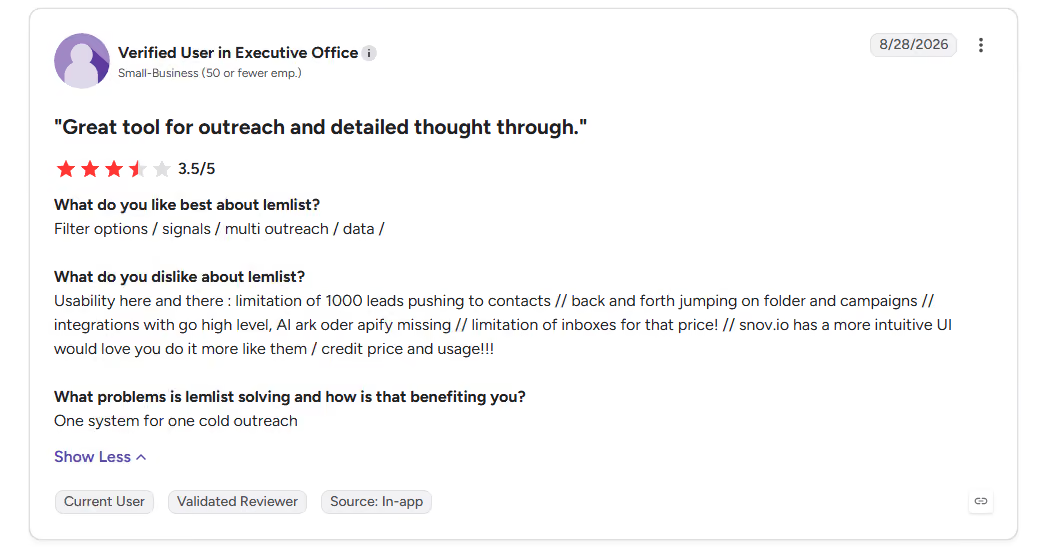
A verified Executive Office reviewer flagged the credit-cost frustration in an August 2026 review, calling out limits on inboxes for the price and credit usage as their main pain point.
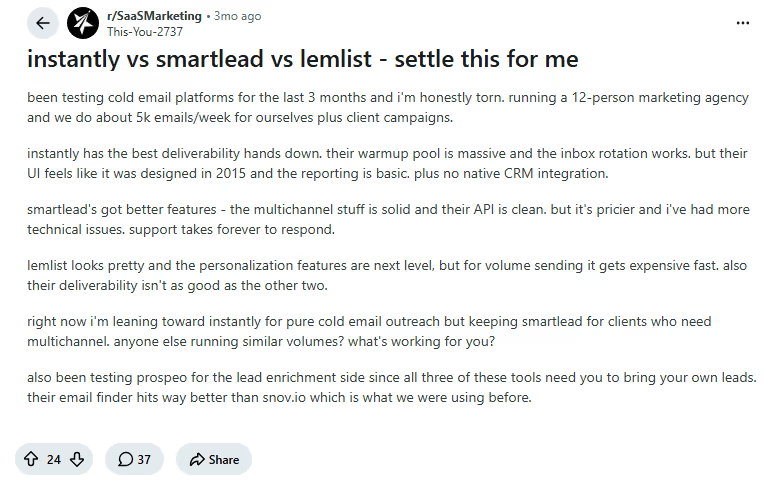
Personalization is where Lemlist genuinely wins. Inbox placement at scale is where Lemlist starts to lose. Reddit users comparing Lemlist against Instantly and Smartlead for high-volume sending keep landing on the same read.
If you send under 500 emails a day per team, you probably will not notice. Once you cross that threshold, the gap shows up quickly in reply rates and bounce rates.
A Reddit thread on r/SaaSMarketing comparing Instantly, Smartlead, and Lemlist for high-volume sending consistently rates Lemlist behind the other two on deliverability at scale, even while praising its personalization.
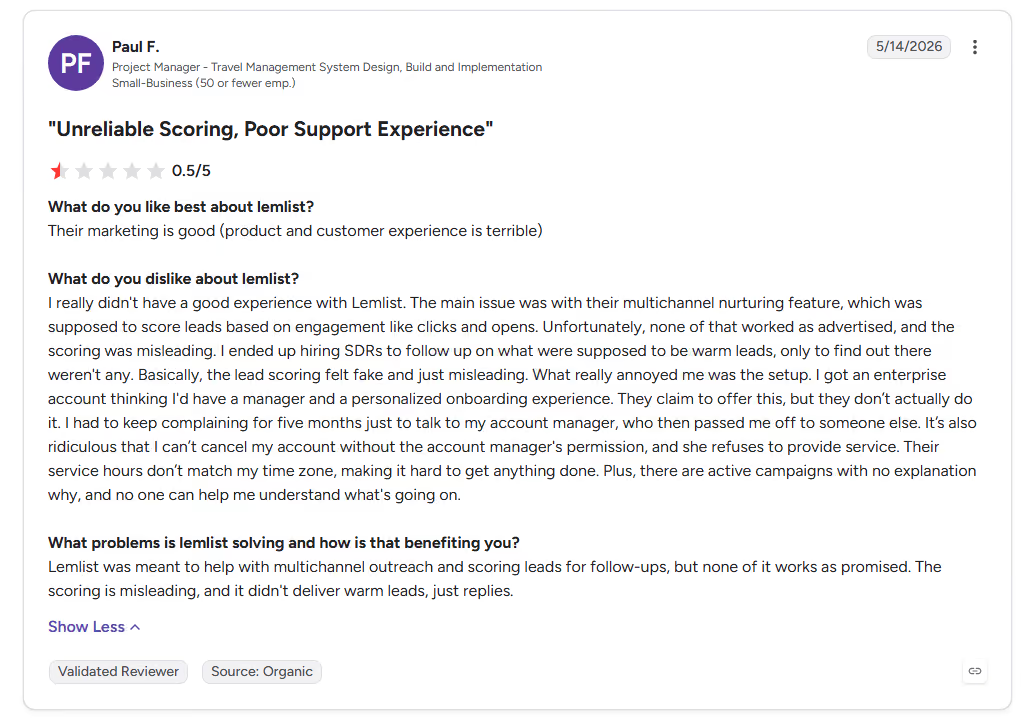
Multiple G2 reviewers describe drawn-out support experiences around refunds and billing. One review flags a customer service bot as slow and unhelpful. Another describes a frustrating process trying to resolve a lead scoring issue that led to hiring SDRs to chase warm leads that were not actually warm.
That pattern matters more than it looks. Deliverability tools need responsive support because problems compound while you wait.
Paul F., a Project Manager who left a 0.5-star review in May 2026, describes hiring SDRs to follow up on what were supposed to be warm leads, only to find the lead scoring was misleading and support responses were dismissive when he raised the issue.
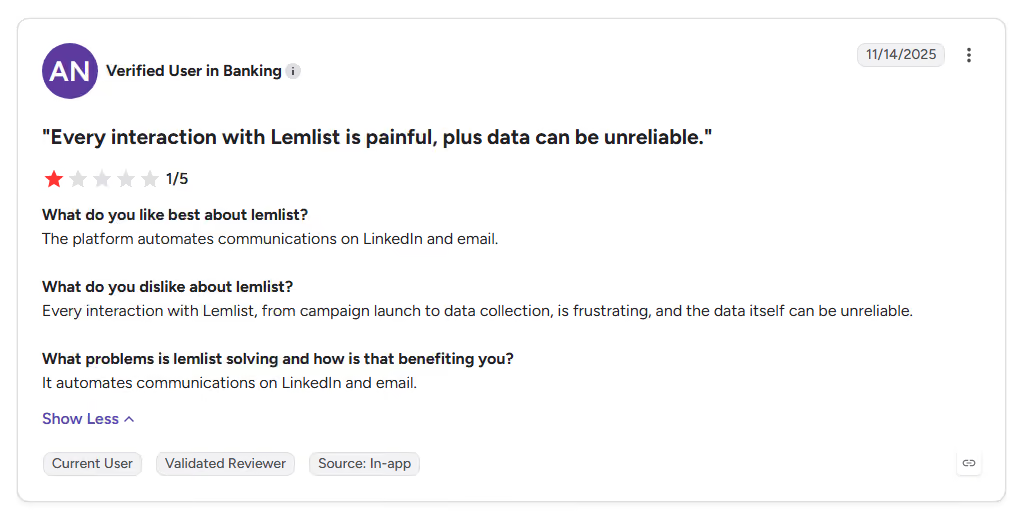
Reviewers report unreliable enrichment data and inflated lead-engagement scoring. G2 reviews specifically call out data as unreliable. A Reddit thread comparing Lemlist and Apollo notes that promised lead accuracy often falls well short in practice.
Prospect data is the fuel behind every cold email campaign. When the data is off, the sequence quality does not matter.
A verified reviewer on G2 flagged the enrichment data as unreliable in their review, and a related r/SaaS thread comparing Lemlist and Apollo describes users experiencing the same pattern across both platforms.
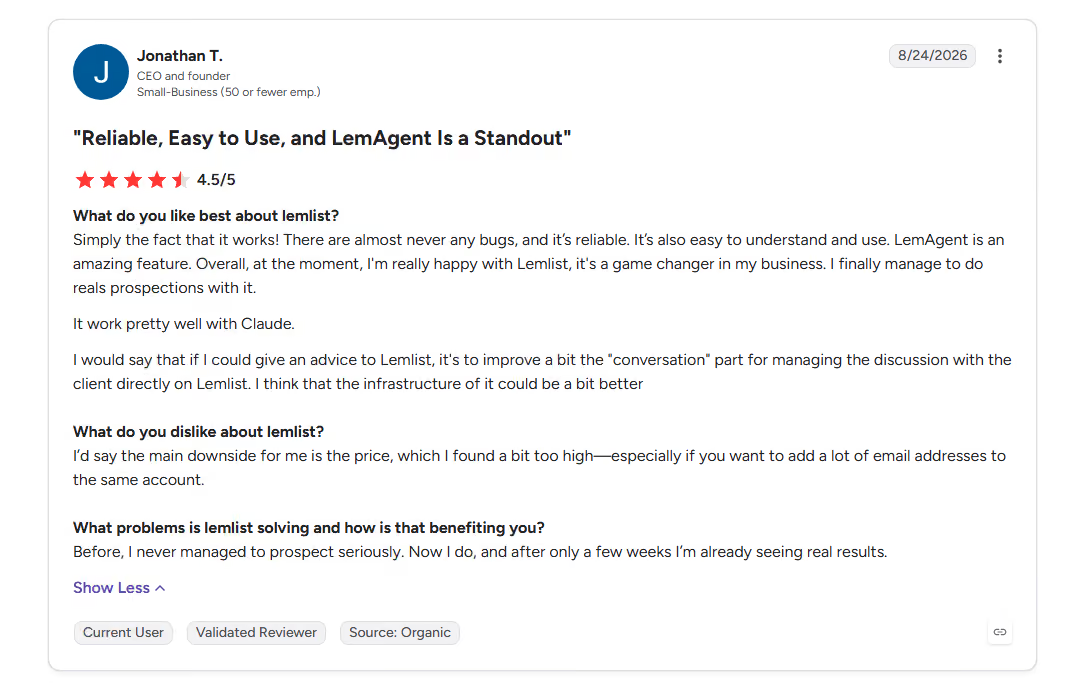
"Missing Features" is the single most-tagged con on Lemlist's G2 profile. Reviewers cite rigid sequence editing after a campaign is published, integration gaps like GoHighLevel and Apify, and a fiddly admin flow for basic setup tasks.
If you already have your Lemlist warmup dialed in and want to compare the standalone version against replacements, I broke that down in my Lemwarm review.
The same Executive Office reviewer from the pricing complaint above also lists platform limitations as their main pain point, calling out missing integrations for GoHighLevel, Apify, and AI Ark, plus limits on leads pushed to contacts and inboxes at that price.
The tools on this list share the same core function as Lemlist. Each one runs cold email or multichannel sequences at some volume, and each one competes for the same buyer.
Beyond that, my comparison used the following criteria to separate them.
Lemlist's per-seat sender caps are one of the loudest complaints in G2 reviews. So the first filter I applied was whether the alternative charges by mailbox, by seat, or gives you unlimited accounts on paid plans.
Every alternative on this list either includes warmup or works cleanly with a standalone tool. I looked at whether warmup is bundled, how the pool works, and whether the tool exposes inbox placement data you can actually act on.
Lemlist covers email, LinkedIn, calls, WhatsApp, and SMS. Not every alternative matches that breadth. I noted which tools handle multichannel natively and which route LinkedIn through third-party integrations.
The market has shifted from "AI personalization" to "AI SDR." So I looked at whether each tool offers automated personalization only, or a fully autonomous agent that runs outbound end to end.
Some tools use plan-based pricing. Others meter by contacts, credits, or seats. I compared entry prices on annual billing and flagged anything that would scale awkwardly.
Support experience surfaces quietly in reviews. I read the recent 1-star and 2-star reviews for every tool to get a real read on what breaks and how the vendor responds when it does.
Now let me walk through each of the 5 Lemlist alternatives that made the list.
Salesforge is the best Lemlist alternative on this list, and the two reasons are simple.
It gives you unlimited mailboxes and LinkedIn senders on every plan. It also lets you hire Agent Frank, an AI SDR who runs outbound end to end while you focus on closing deals.
That combination does not exist inside Lemlist in the same form.
Lemlist has lemAgent for chat-driven list building, but there is no fully autonomous AI SDR agent handling sequences on your behalf.
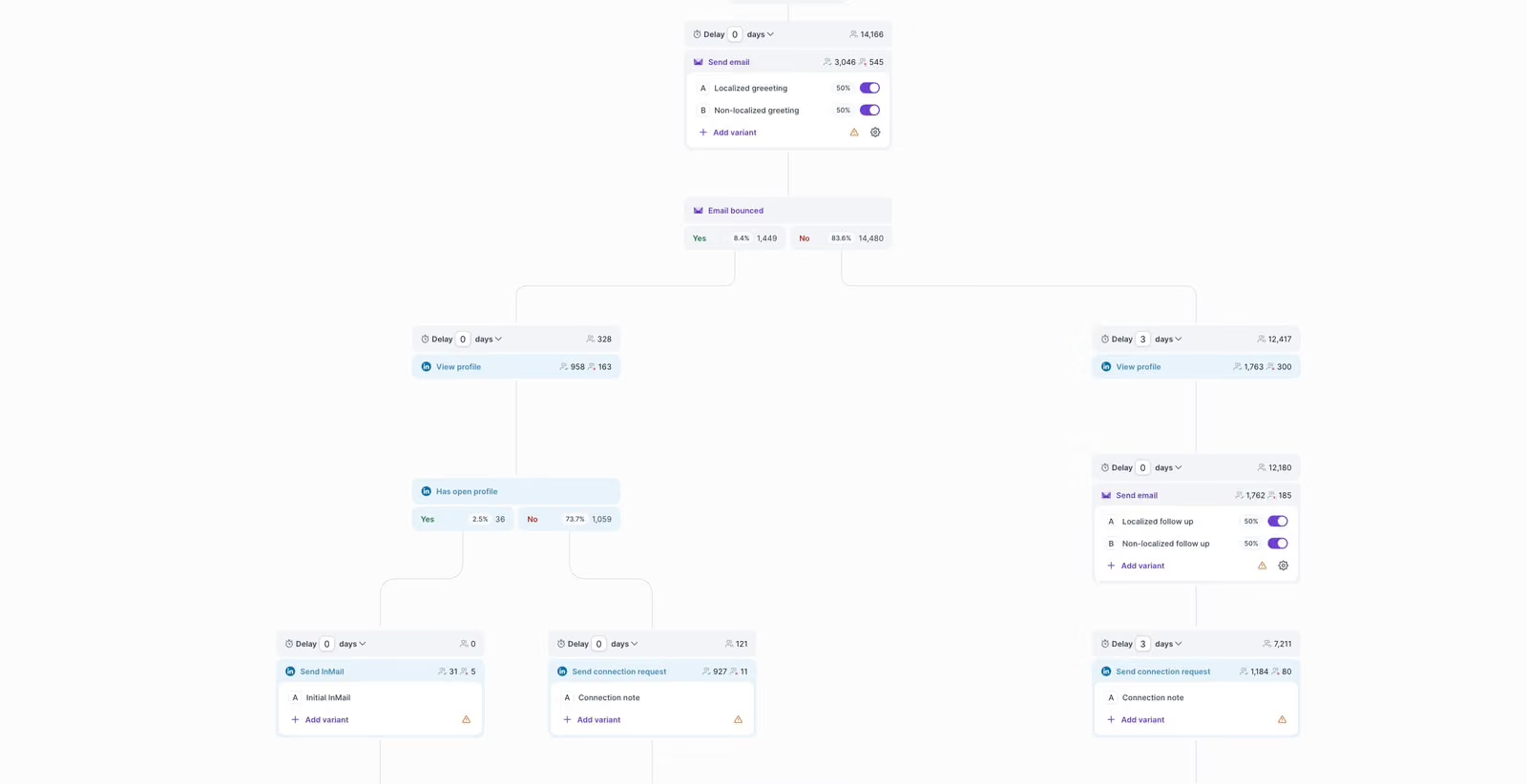
The multichannel workflow inside Salesforge covers email and LinkedIn in one sequence. Primebox™ handles replies across every channel and sender in a unified inbox. Warmforge integration runs automatically, so mailboxes stay warm without a separate subscription.
Agent Frank is the part that changes the math for scaling teams.
He runs on Auto-Pilot or Co-Pilot mode, works in 20+ languages, and comes with a dedicated Account Manager. If you want a fuller breakdown, I covered it in my Salesforge review.
The first time I looked at an Instantly setup in the wild, I stopped counting mailboxes at 47. That is the tool's actual center of gravity.
Agencies and high-volume senders who need to run cold email across many domains without hitting per-seat costs.
Instantly bundles unlimited email accounts and unlimited warmup on every paid plan.
That single design choice is why the tool has been eating agency market share for years. If your setup involves 20 or 30 mailboxes across multiple domains, Instantly's pricing model rewards you instead of penalizing you.
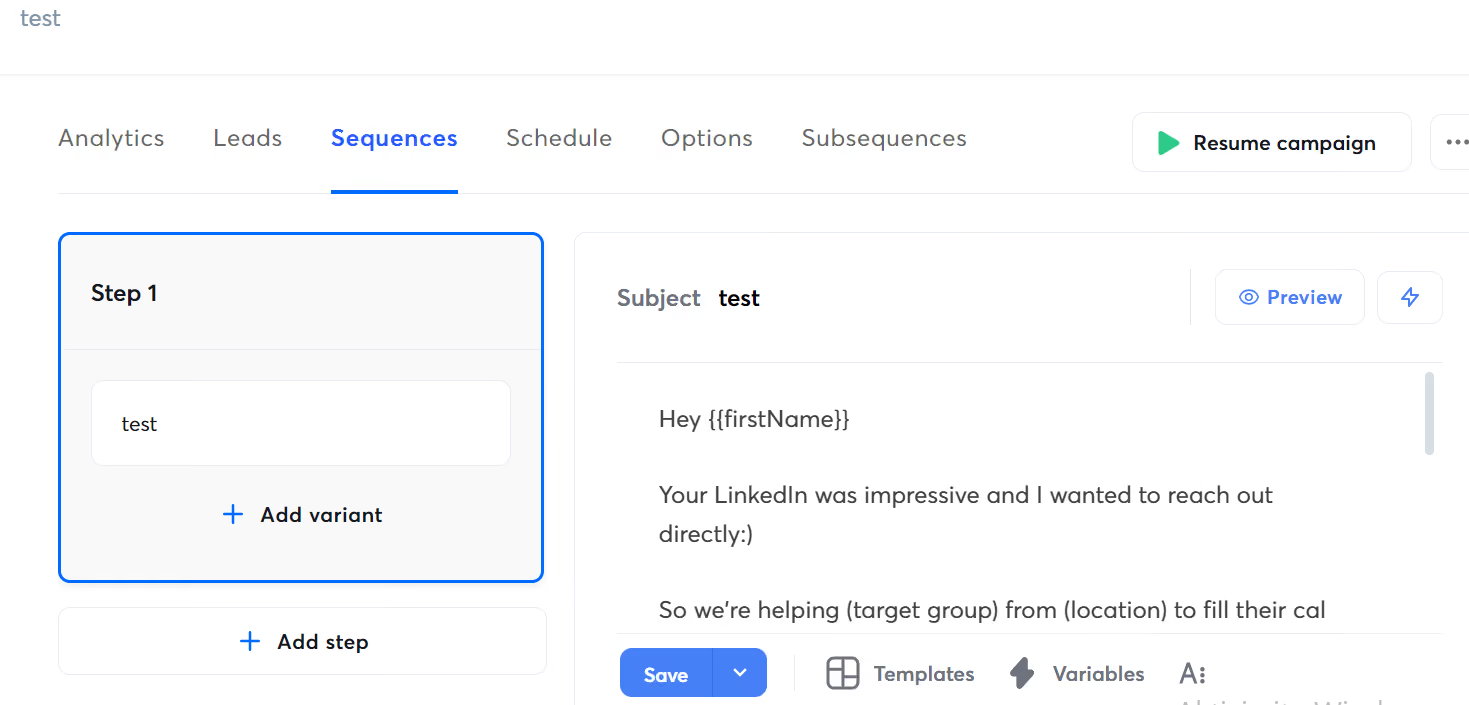
The Unibox inbox pulls replies from every connected account into one view. The AI Sales Agent handles automated replies and routing.
Website visitor identification and a built-in lead database round out the platform. If you want a deep look at how Instantly's own warmup handles inbox placement, I broke it down in my Instantly email warmup review.
The most common complaint in recent 1-star G2 reviews is billing and cancellation friction. That is worth knowing going in, especially if your team has a low tolerance for support tickets during setup.
Apollo comes at Lemlist from a completely different angle. It started as a database, not a sender, and that lineage still shows up in how the product is priced and used.
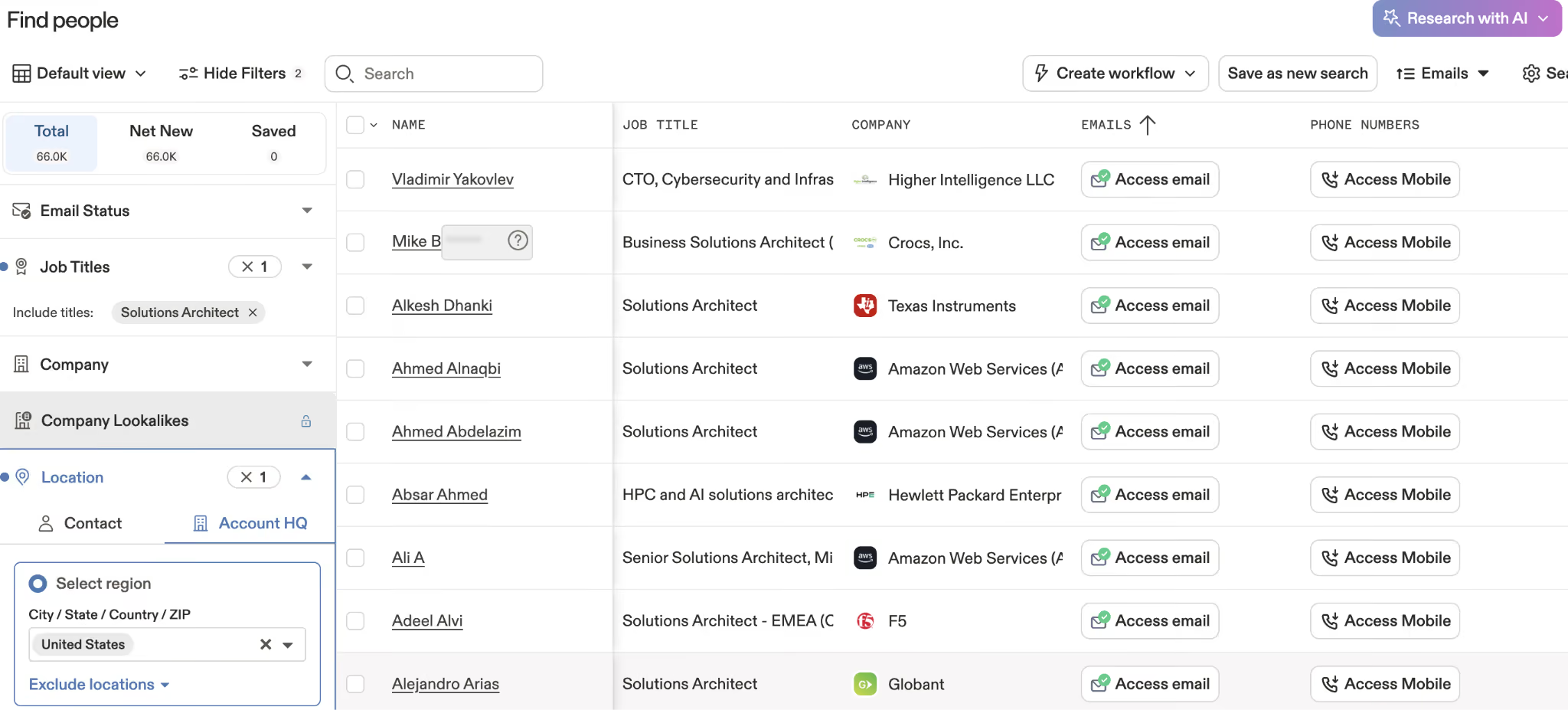
The contact database is the widest of the group. Apollo also offers the only free-forever tier on this list, which makes it a low-risk way to test whether a database-first workflow fits your team.
Beyond the database, Apollo bundles a native dialer with call recording and AI call insights. That is a rare feature combination for outbound tools.
Deal and pipeline management is included as CRM-lite functionality, which reduces the need for a separate tool at smaller ACVs.
If you already tested Apollo for outbound and found the warmup lacking after the platform shut down its warmup product, I covered replacement options in my Apollo email warmup alternatives breakdown.
The most repeated complaint in recent Apollo reviews is nonexistent human support and billing practices that reviewers describe as unauthorized. One G2 review of a 1,000-record test found more than half of the email addresses wrong. Data volume is not the same as data accuracy.
Woodpecker almost did not make this list.
Its 1-star reviews are thin because Woodpecker has very few negative reviews overall, but the tool's usage-based pricing structure took me a minute to get comfortable with.
Once I looked at the math, the picture changed. Woodpecker bundles unlimited team members and unlimited email accounts on every level. You pay for the volume you actually send, not for the seats you might one day need.
Woodpecker's product philosophy is deliverability-first. Adaptive Sending protects against exceeding sender limits. The Deliverability Monitor predicts and prevents sending issues before they hit your reputation. Free email verification and free automated warmup come standard.
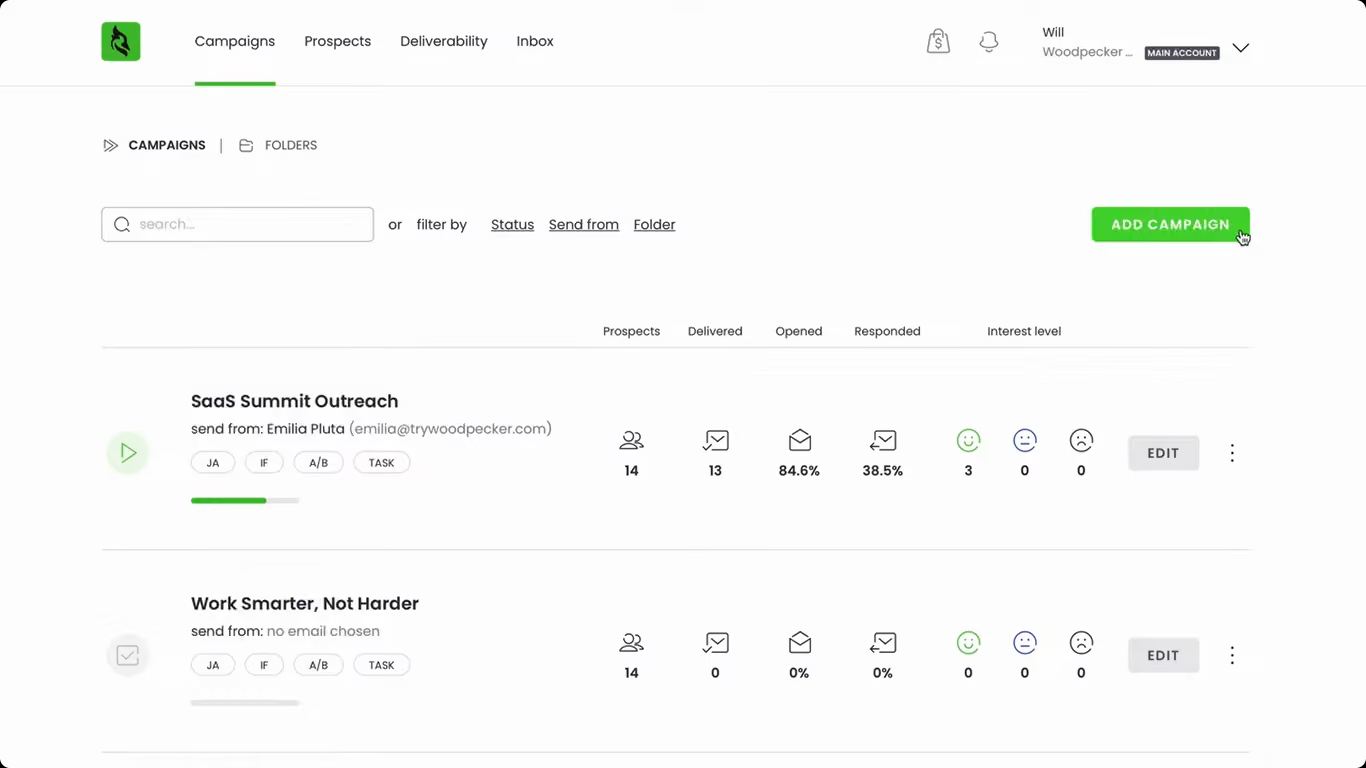
That combination fits smaller teams that value reply quality over raw send volume. If your team's core complaint about Lemlist is inbox placement at scale, Woodpecker is a natural first alternative to test.
The trade-off is that LinkedIn automation is a paid add-on at $29 per LinkedIn account per month. If multichannel is core to your motion, that add-on cost stacks quickly across multiple senders.
Saleshandy pulled off the biggest positioning shift of any tool on this list over the last year. It used to sit in the "affordable email sequencer" bucket. Today it positions as a complete multichannel outbound platform.
The current product covers email, calls, LinkedIn, WhatsApp, and custom tasks in one sequence. The lightweight CRM handles deal tracking natively, which reduces the need for a separate pipeline tool at earlier stages. The MCP connector lets you drive Saleshandy from Claude in plain language, which is a genuinely useful workflow shift.
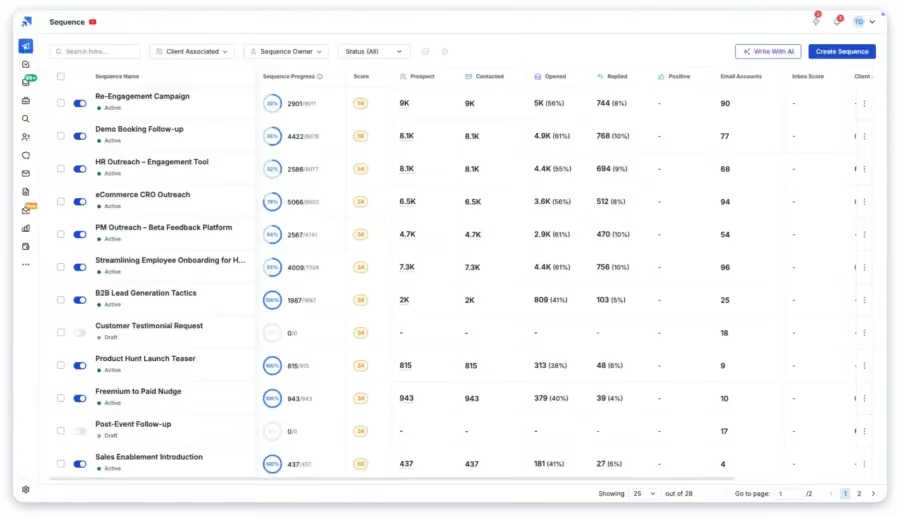
The agency mode is where Saleshandy separates from the rest of the list. Unlimited clients, white-label configuration, and per-client sending infrastructure make it a natural fit for lead gen agencies running cold email as a service.
The 852M+ contact database, native email infrastructure setup with auto-configured SPF/DKIM/DMARC, and automatic background warmup round out the platform.
The pattern in recent reviews to watch is credit-metered value. Some reviewers describe pre-warmed domain claims not matching what they received. Others describe credit spend on contact data that came back inaccurate. Verify what you get for your plan before you commit.
Salesforge is the Lemlist alternative I recommend to most teams that reach out. The math is straightforward. Unlimited mailboxes plus unlimited LinkedIn senders plus Agent Frank as an AI SDR beats the per-seat pricing math on Lemlist as soon as your team grows beyond one or two reps.
Instantly wins for agencies running high-volume cold email. Apollo wins for teams where contact data is the bottleneck. Woodpecker wins for deliverability-first small teams. Saleshandy wins for lead gen agencies wanting white-label agency mode with native CRM.
Whichever sender you pick from this list, the mailboxes still need to be warm and monitored before you send at real volume. That is where Warmforge fits underneath every tool on this page.
Salesforge is the best Lemlist alternative for most teams in 2026. It gives you unlimited mailboxes and LinkedIn senders on every paid plan, plus Agent Frank as an autonomous AI SDR who runs outbound end to end. Warmforge warmup is bundled at no extra cost, which removes deliverability tooling as a separate line item.
The five most common reasons teams leave Lemlist are pricing scaling faster than expected, deliverability lagging at cold email volume, slow support during billing issues, inconsistent lead and enrichment data, and product rigidity around sequence editing and integrations. Missing Features and Expensive are the two most-tagged cons on Lemlist's G2 profile.
Salesforge starts at $40 per month on annual billing with unlimited mailboxes and unlimited LinkedIn senders included. Lemlist's Email plan starts at $55 per month on annual billing with per-seat sender caps. The Salesforge Pro plan is meaningfully cheaper at entry and scales without adding per-seat costs.
Woodpecker's deliverability-first product philosophy gives it an edge for teams sending moderate volume. For teams sending at higher volumes, Salesforge with bundled Warmforge warmup and Instantly with unlimited warmup on every plan both hold up well. Any of the three benefits from running a Warmforge placement test before you scale sending volume.
Instantly works better than Lemlist for agencies running high-volume cold email across many mailboxes. The unlimited email accounts and unlimited warmup on every paid plan remove the per-seat scaling penalty that hits Lemlist users as they add senders. That single design choice is why Instantly has been eating agency market share for years.
Apollo is a good Lemlist replacement if your bottleneck is contact data rather than sending workflow. The database is the widest of any tool on this list and the free-forever tier lets you test fit without committing. Just plan for additional email verification tooling since bounce rates on unverified Apollo leads can run 15% to 25%.