When you start looking at an email warm-up API, it’s usually because warm-up needs to be part of your workflow, not something managed separately.
Warmy.io API is one option teams explore for this reason.
It allows email warm-up and basic deliverability to be handled through an API, so it can live inside a product or system instead of a standalone tool.
But choosing an API like this often raises more questions.
Is a warm-up alone enough? Do you need visibility into inbox placement?
Do you want ongoing checks on email health?
This guide breaks down what Warmy.io API actually offers, where its focus stays limited, and why some teams also look at Warmforge API before making a decision.
Key Takeaways
Warmy.io is an email warm-up and deliverability tool that helps inboxes build sending reputation before and during email outreach.

It automatically sends and receives warm-up emails, keeping inboxes active and trusted so emails land in the inbox instead of spam or promotions.
Warmy also prepares domains and IPs for outreach, using automated and AI-driven processes to build domain reputation over time.
Warmy can be used in two ways. One way is through its dashboard, where teams can see deliverability data and manage their setup.
The other way is through the API, which is useful if you want these deliverability features to live inside your product or website.
Use Warmforge API to add email warm-up and maintain a clean, stable email infrastructure as you scale.
Here’s what you can actually do with the Warmy.io API:
You can use the API to run email warm-up inside your product.
The API supports email deliverability by helping emails avoid spam and promotions folders and improve inbox placement.
Once connected, the warm-up and deliverability process can run automatically through the API, with less manual work.
Using the Email Warm-Up API, projects can be created and email accounts connected in about two minutes, which keeps setup simple.
The API is built to work with websites and applications, making it easier to add deliverability features without heavy development.
Warmy provides ready-made interfaces through the API, helping save time and effort during development.
Here’s how to use the Warmy.io API works from start to finish
Collaborate with the Warmy team to help you in setting up with API. After that, you get access to the API and receive your API key.
Once you have the API key, the next step is to test the API endpoints.
This helps make sure everything is working as expected before going live.
After testing, you can launch the email warm-up and deliverability feature inside your website or product using the API.
Using the Email Warm-Up API, you can set up projects and connect email accounts.
Once everything is connected, email warm-up and deliverability processes run automatically through the API, as part of your system.
Here are some strong limitations of the Warmy.io API.
Warmforge’s API runs email warm-up and deliverability checks automatically, including placement tests and ongoing monitoring.

This makes it possible to manage deliverability as part of your existing workflow instead of switching between tools.
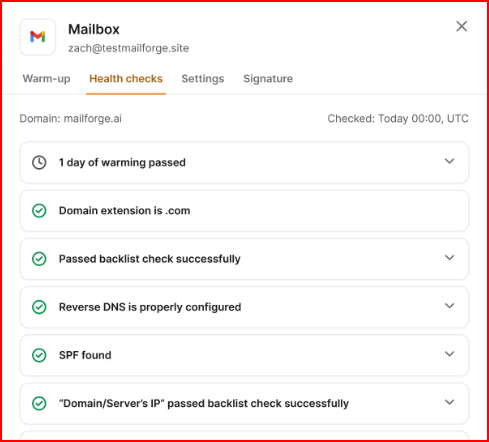
The API supports email warm-up for Google Workspace and Microsoft 365 accounts.
Warm-up can run continuously, helping maintain the sender's reputation while emails are being sent.
It focuses on checking and improving the health of your email setup, such as DNS records, blacklist status, placement results, and overall deliverability signals.
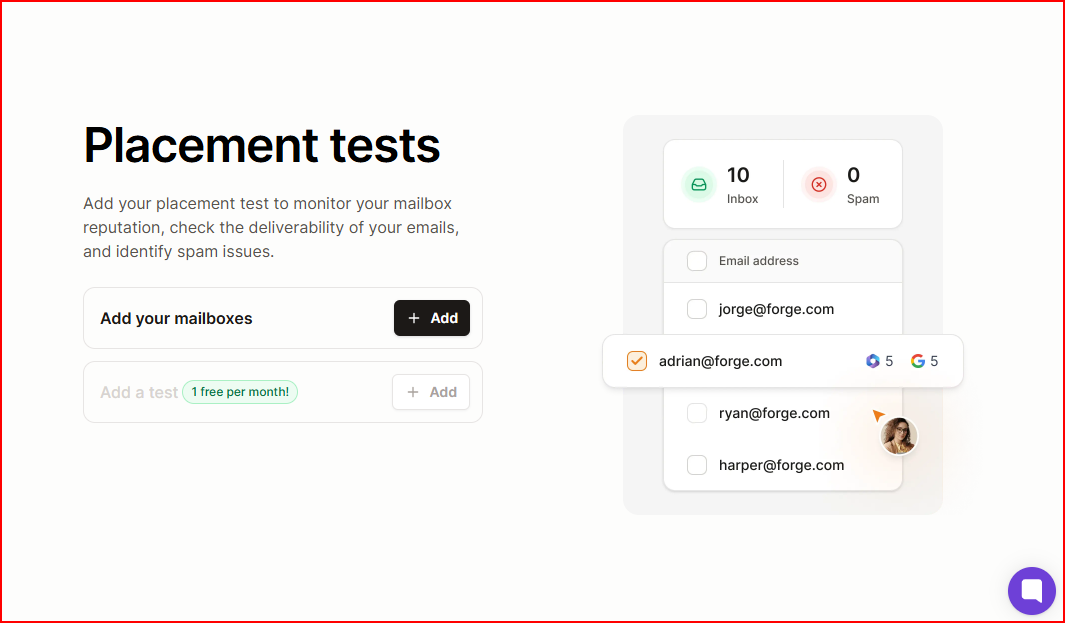
In short, the Warmforge API is presented as a way to manage warm-up, placement testing, and deliverability monitoring together, all through API access, for teams that want these pieces connected inside their own setup.
When you look at Warmy.io API, it is mainly focused on email warm-up.
It helps teams add warm-up and basic deliverability into their product, but it keeps the scope limited to that area.
This works if warming up inboxes is the only goal.
But if you also want to check where emails land or keep monitoring deliverability through the same API, the setup can feel limited.
Warmforge includes placement tests and deliverability monitoring through the API.
This means warm-up, placement checks, and monitoring can stay connected instead of being handled separately.
Add Warmforge to your workflow and manage email warm-up and deliverability through its API.