
If there's one part of outbound that still frustrates experienced teams in 2026, it isn't writing the email or choosing the perfect send time.
It's building a high-intent prospect list that lands in the inbox, reaches decision-makers, and gives your team a real shot at booked meetings.
The quality of your list determines your response rates. Period.
Verified emails determines whether your bounce rate stays below 2%.
And deliverability determines whether any of your emails even make it to the inbox.
If you ignore any one of those, you'll usually feel the impact a couple of weeks later when reply rates take a toll and you are left wondering what went wrong.
That's why in this guide I'm going to walk you through
Because a great list isn't just something you create once. It's an asset you can rely on for every campaign that follows.
Let's get into it.
Most of the professional mailing lists I see fail for the same three or four reasons, and none of them are about clever copy or the right subject line.
The problems sit inside the list itself and inside the sending environment the list gets pushed through, which is why fixing the copy rarely fixes the campaign.
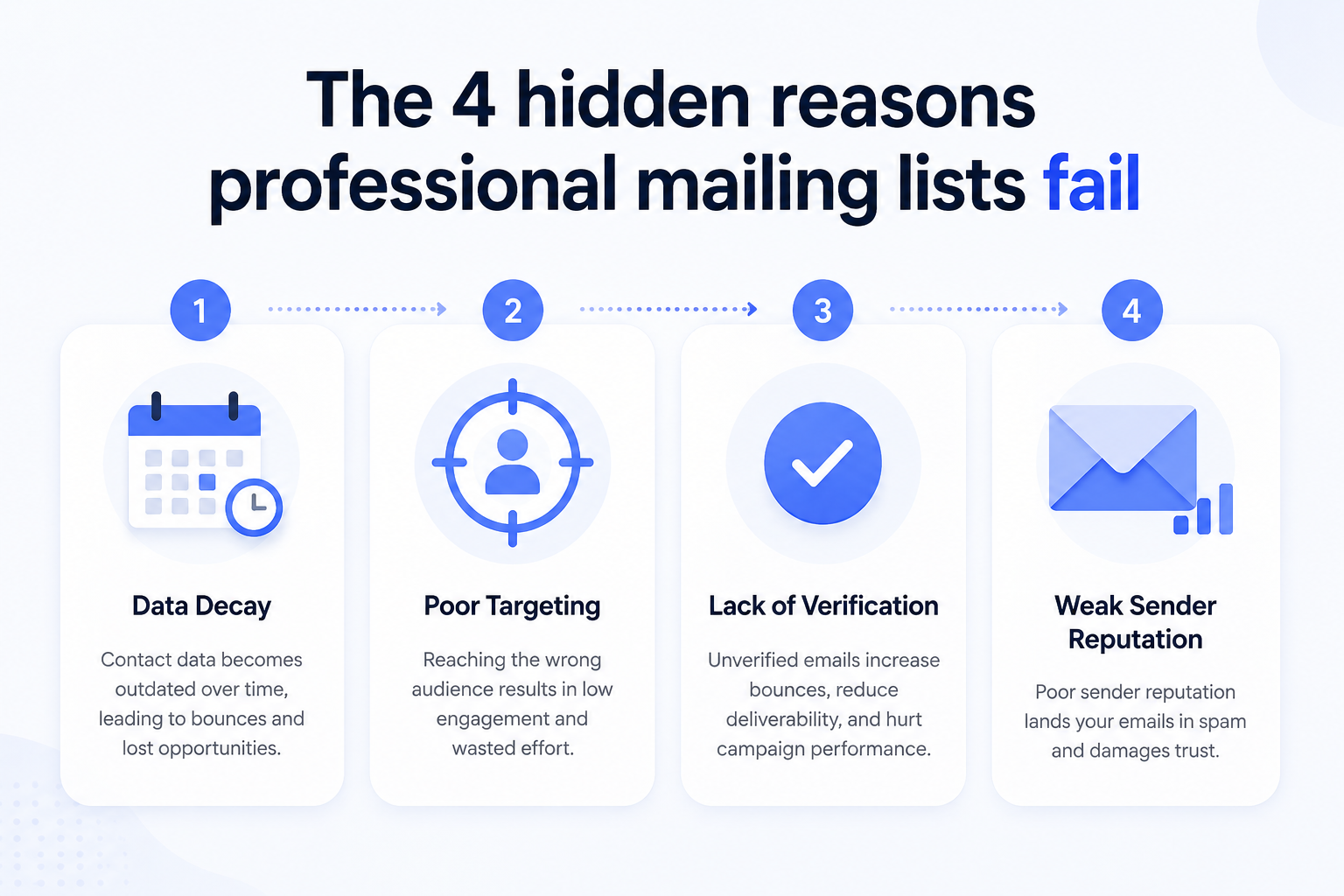
B2B contact data goes stale at somewhere between 22 and 30 percent per year. The list you built last October has already lost a quarter of its accuracy by the time you send to it, because people change jobs, get promoted, or leave companies entirely, and the emails you have on file quietly stop working.
Every bounce that comes from a stale address is not just a lost message, it is a small hit to your sender reputation that adds up faster than most teams notice.
A list described as "marketing leaders in the US" sounds specific until you actually look at it. What you end up with is a blend of interns, mid-level managers, VPs, freelancers, and a few retired professionals who forgot to update their LinkedIn, all lumped into one segment, and the result is generic messaging that lands somewhere in the middle of the road and resonates with nobody.
Professional mailing lists work when they are built around real filters like exact job title, seniority band, industry, headcount, and geography, and they stop working the moment any of those filters get lazy.
Sending to email addresses that no longer exist triggers hard bounces, and once your hard bounce rate climbs above two percent, mailbox providers start treating your future emails with suspicion. Real verification is not just a syntax check, it is a mix of SMTP handshakes, DNS lookups, and catch-all detection that filters out the addresses which look right on paper but will never actually deliver.
If you are building a professional mailing list and skipping verification, the rest of the work you do on copy and timing is going to underdeliver, because the list itself is quietly working against you.
This is the part almost no other guide on this topic covers. Even if your list is perfectly targeted and fully verified, sending from a domain with no warmup history or a damaged reputation means your emails will land in spam anyway, because mailbox providers score your domain and IP based on how you have been sending over time.
Once that score drops, it can take weeks to rebuild, which is why treating deliverability as an afterthought is one of the most expensive mistakes in outbound. If you want to go deeper on how reputation gets built and broken, the complete guide to email sender reputation breaks down the exact signals to watch.
Now that you know what usually kills a mailing list before it earns its first reply, here are the nine methods I have used to build lists that actually perform.
Some of these get you to a working list in minutes and others compound over months, and the strongest professional mailing lists usually combine three or four of them at once rather than betting on any single one.
If you need a professional mailing list ready to send this week, a B2B lead search engine is the fastest path from zero to a targeted, verified list.
Leadsforge is what I lean on here, and the reason has less to do with database size and more to do with how the search actually works in practice.
You describe your ideal customer profile in plain language, choose the filters that matter, and Leadsforge returns a list built from more than 500 million verified professional contacts.
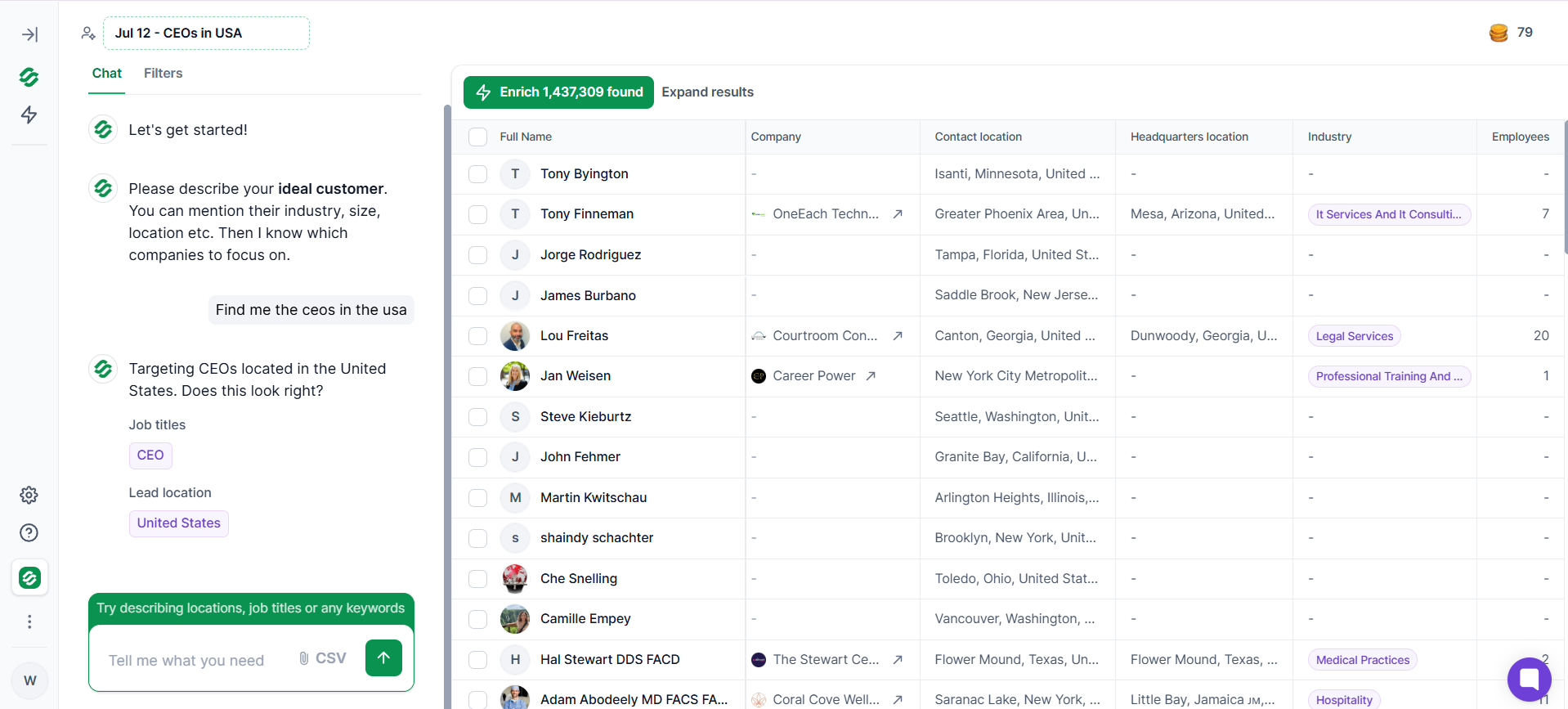
What sets it apart from a single-source database is waterfall enrichment, which pulls contact data from multiple providers and stitches them together into a single verified profile, so instead of ending up with a 50% hit rate from one source, you end up closer to a ninety percent hit rate on a stitched contact.
A few practical habits change how much value you get out of a lead search engine in the first hour:
The lead magnet strategy still works in 2026, but only for people who treat it like a product decision rather than a content chore.
What earns a professional's email address is not a generic ebook, it is a resource that solves a specific problem they were already trying to solve at their desk that morning.
The framing that has worked for me is to pick one recurring pain your audience has and build the smallest, most useful artefact that resolves it.
Example 👉For a B2B agency, that might be a library of tested cold email templates for a specific industry.
A SaaS company will often see stronger downloads on an ROI calculator or a benchmark report than on a general guide, and a recruiting firm gets better traction with role-specific salary bands or interview scorecards than with a standard "how to hire" ebook.
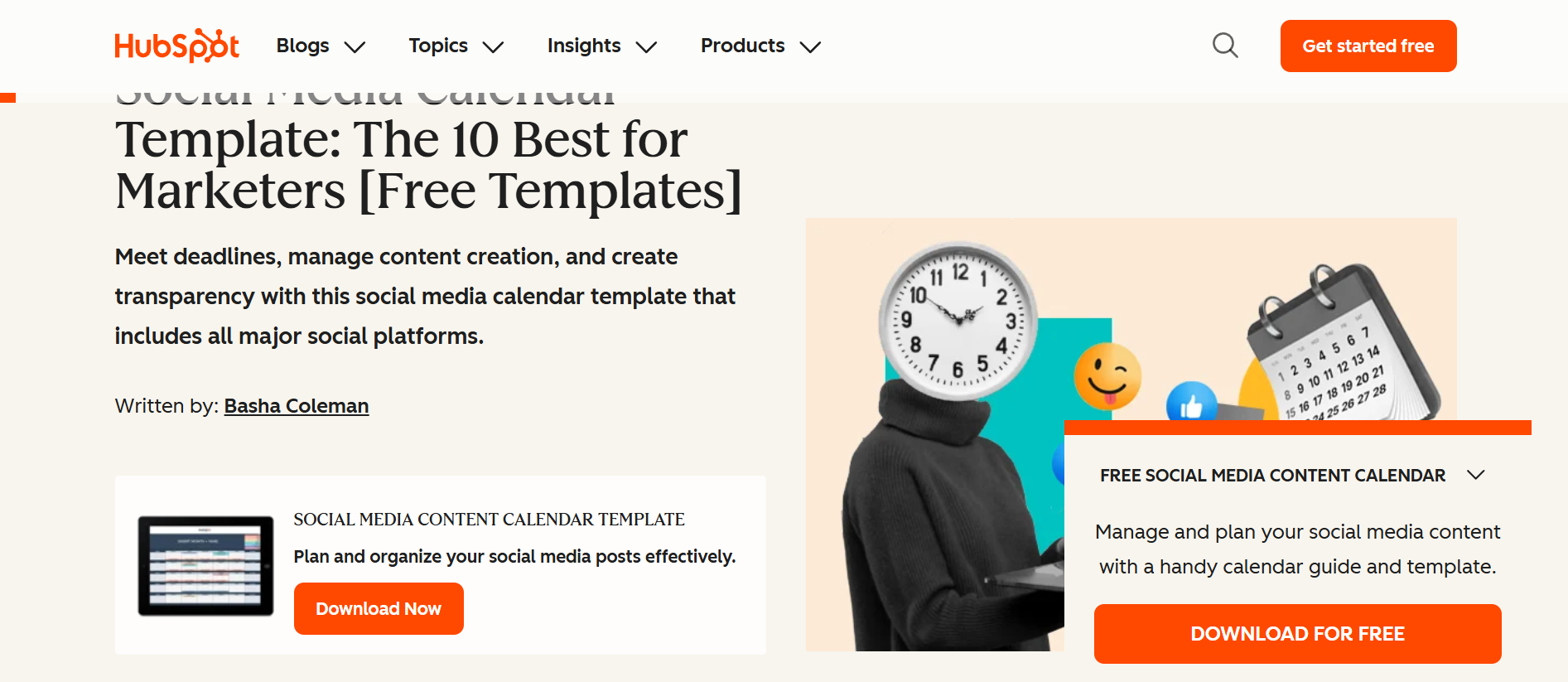
Once the magnet is built, promote it in the places your audience is already reading, keep the signup form to name and business email, and set expectations upfront about what the follow-up sequence will contain.
The people who share their email in exchange for a genuinely useful resource are the same people who will engage with the next twelve emails you send them, which is why lead magnet quality shapes the long-term health of the list more than almost any other single decision.
The signup form buried in your homepage footer is almost never what grows a professional mailing list.
What grows it is placing forms where visitors are already paying attention, which means the middle of high-traffic blog posts, next to lead magnet callouts on resource pages, and inside the flow of your pricing or feature pages.
Timing matters as much as placement. If your typical visitor spends less than a minute on the page, a five-second delay on a popup makes sense, but if they tend to browse for longer and read multiple pages, a scroll-triggered form that appears after the reader hits the middle of the content will convert far better.
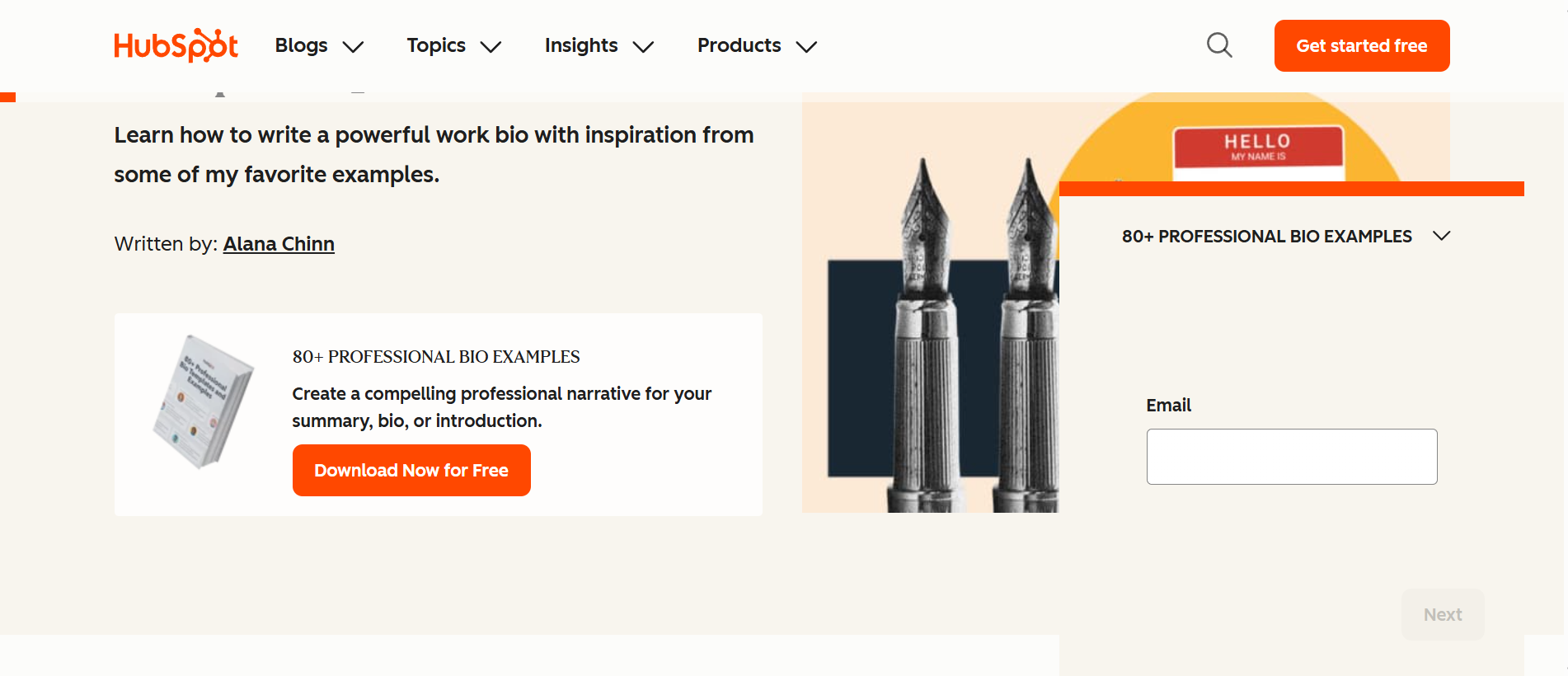
Ask for the minimum you can get away with, since every extra field cuts your conversion rate, and for most B2B contexts a name and business email is enough to start, with the rest of the profile enriched downstream.
A landing page beats a homepage for list building because it does one thing at a time, without the distractions of navigation, feature callouts, or unrelated offers. The pattern that consistently works has a few consistent elements:
Landing pages work best when they are tied to a specific traffic source. If you are running an ad campaign, mentioning your lead magnet on a podcast, or promoting a webinar, the landing page becomes the destination that converts intent into subscribers, and the message on the page can mirror the language of the source that brought the visitor in.
The moment you try to make one landing page serve four different campaigns, conversion rates collapse because the message stops matching the intent that clicked through.
If a portion of your existing subscribers are engaged and getting value from your emails, the fastest way to grow a professional mailing list from that base is to give them a reason to share it. A referral program does not need to be complicated.
You offer something a subscriber genuinely wants, like exclusive content, a private benchmark report, or early access to something you are building, and in return they share a referral link with a peer who benefits from the same thing.
The subscribers you get through referrals tend to be higher quality than any other source, because they arrive with implicit trust from someone they respect, they engage more consistently, and they stay subscribed longer.
Keep the referral mechanic frictionless, since a pre-written share message and a one-click social option usually outperforms a "here is your unique link, do what you want with it" flow that leaves the subscriber to figure out the messaging.
The generic "join our newsletter" exit popup has been trained out of most professional readers, but a context-matched offer at the moment someone is about to leave your site still converts.
The trick is to match the offer to the page, because someone reading a blog post about email deliverability will not sign up for your generic newsletter, but they might sign up for a deliverability checklist that goes deeper on what they were already reading.
Keep the popup design clean, ask only for the email, and never trigger it before the reader has had a chance to consume any of the page. If you show it too early it feels like an interruption, and if you show it too aggressively across sessions it costs you more trust than it earns emails.
Not everyone wants to fill out a form, and on mobile especially, a form is friction that a chat conversation does not have. A well-configured chatbot can capture professional emails in a way that feels like a helpful exchange rather than a data grab, which is a meaningful difference for the kind of contact who reads carefully before sharing an email address.
The pattern I have seen work is a chatbot that opens with a genuine question about what the visitor is looking for, offers a specific resource based on their answer, and then asks for their email to send it over.
The contacts captured this way tend to be more qualified than pop-up captures because the reader has already told you what they care about, and the follow-up sequence can be tailored to the intent they expressed.
Chatbots will not replace your other methods, but they catch a segment of visitors that forms and popups routinely miss.
This is the method most guides on professional mailing lists skip, and it is often the difference between a campaign that gets replies and one that quietly lands in spam. Once you have built your list, the two steps that stand between the list and the inbox are email verification and mailbox warmup, and they solve different problems on different sides of the send.
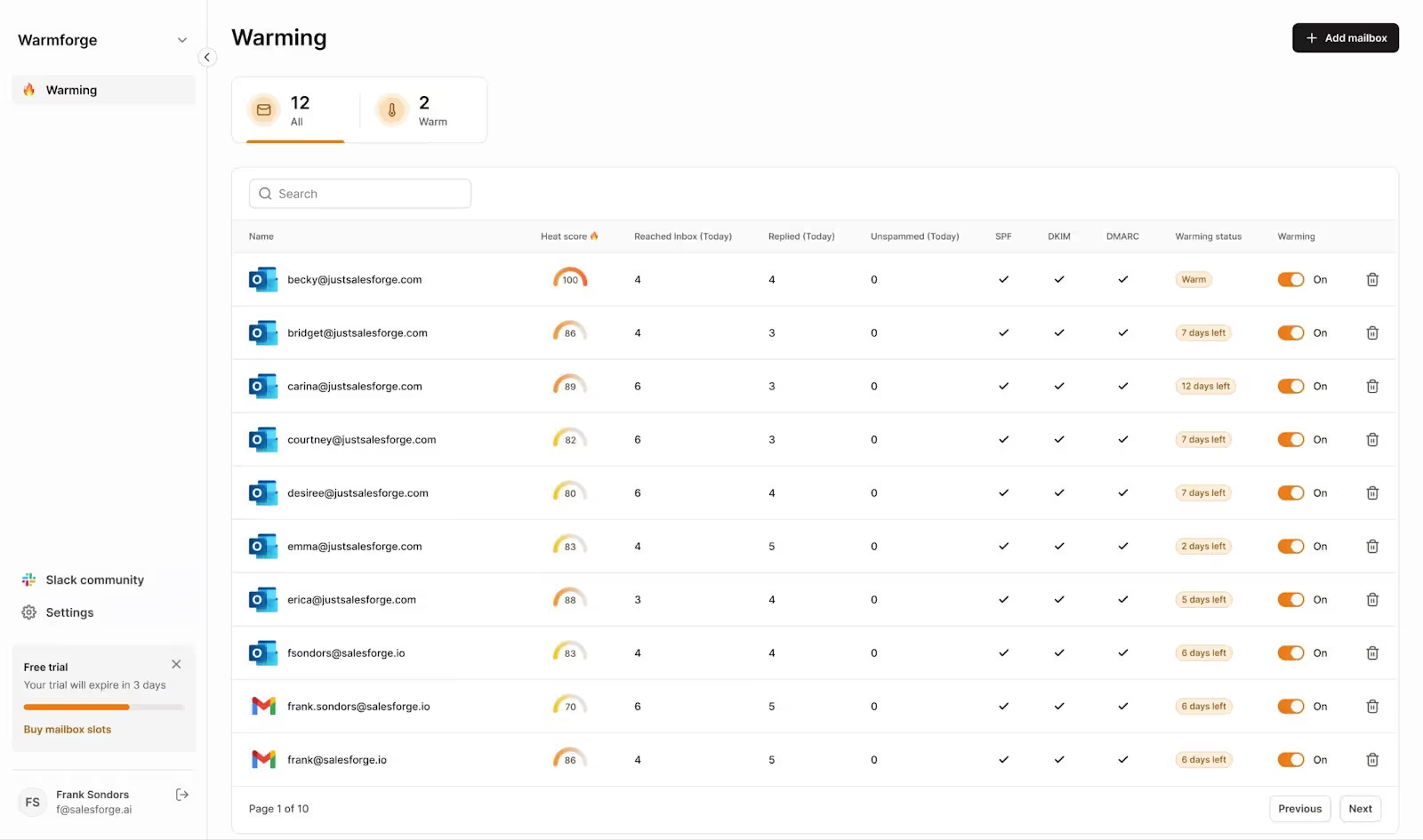
If you want a deeper read on what warmup actually does and where its limits are in 2026, this guide on how email warmup works covers what still matters and what has changed as filters have gotten stricter.
Skipping verification burns your sender reputation with hard bounces, and skipping warmup starts you at zero reputation and forces mailbox providers to guess whether you are a legitimate sender.
Doing both before the first campaign is one of the cheapest ways to protect the list you just spent time building.
The last method is less about volume and more about precision.
LinkedIn holds richer real-time signals about who is in what role, which companies are hiring, and which decision-makers are actively engaged in specific topics, and layering LinkedIn data on top of your professional mailing list gives you contacts that are both current and contextually relevant to what you are selling.
Intent signals go a step further.
When you can see which companies are researching a specific topic, hiring for a certain role, or announcing funding rounds that suggest a buying window, you can build a segment of your list that is timed to actual buying triggers rather than blanket ICP fit.
Leadsforge covers both of these through competitor followers, lookalikes, and intent data feeds, and combining them with the base ICP search from method one is how the highest-response lists get built.
A professional mailing list with just a name and an email address is a list you cannot segment, cannot personalize, and cannot use for anything beyond a blanket send.
The fields that make a list actually useful for outreach are the ones that let you group contacts by attributes that matter for messaging, which means you have to think about segmentation at the point of collection rather than after the fact.
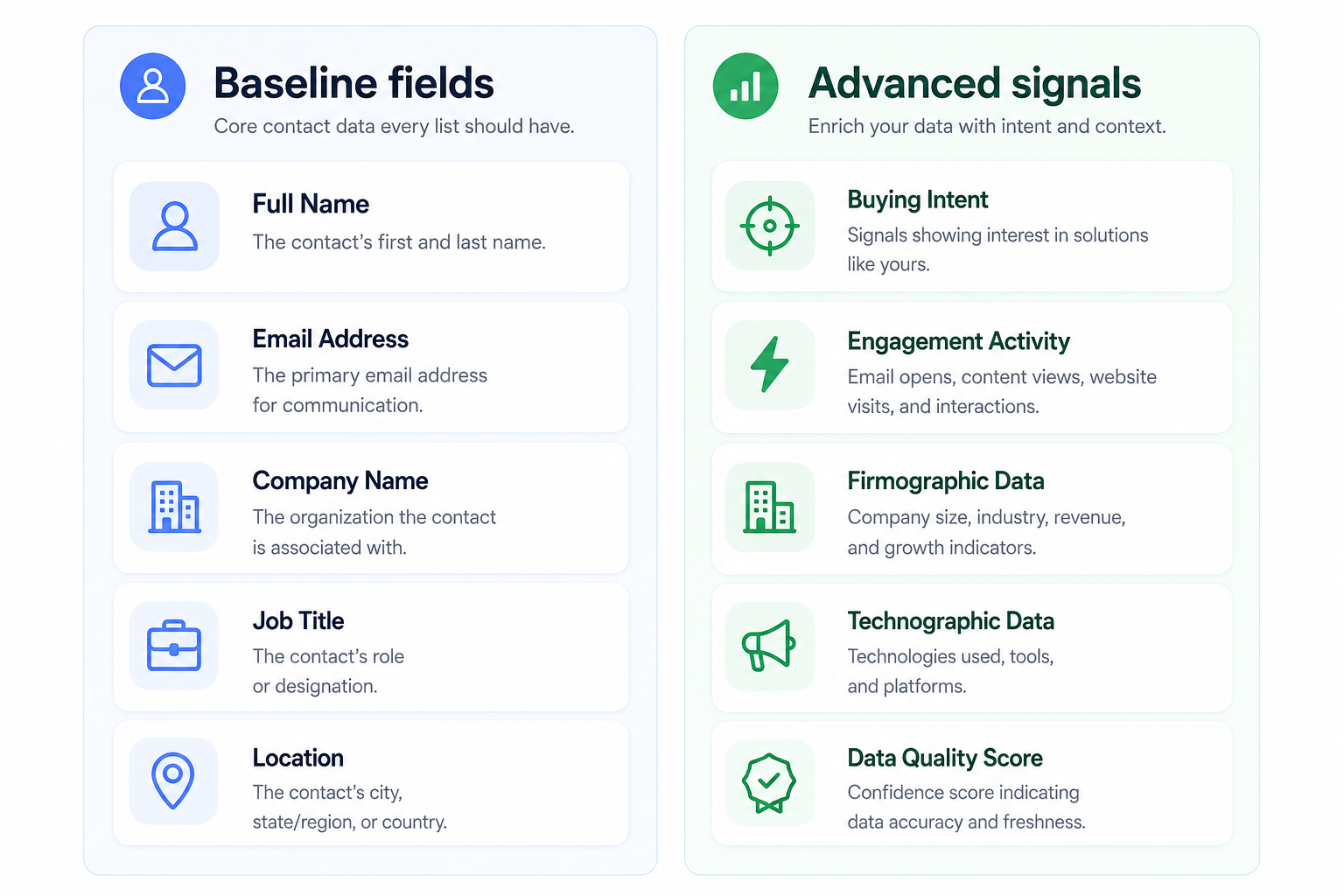
These are the ones I would capture at a minimum before I ever send the first email:
Once you have the baseline, these are the fields that turn a list into a targetable asset:
The more of these fields you capture at the point of collection, the less enrichment work you have to do downstream, and the earlier your personalization can start showing up in the copy.
Segmentation is where most professional mailing lists earn their return, and it is also where most teams do the least work.
The question I get asked more than any other on this topic is whether to buy a list, build one organically, or do some combination of the two.
There is no single right answer, but the trade-offs are clean enough that the decision usually makes itself once you look at your situation honestly.
Buying a pre-built list from a generic vendor is almost always the wrong move for a professional context, because the data is often months old, poorly targeted, and full of contacts who never opted in to hear from you.
A verified B2B lead search engine like Leadsforge sits in the middle, giving you the speed of buying with the targeting precision of building, since you are pulling from a live database with real-time verification and choosing exactly which contacts you want.
Building organically through lead magnets, forms, and referrals gives you the highest quality subscribers but the slowest timeline, and it is the right long-term move for anyone building a brand-owned audience.
For most B2B teams I have worked with, the hybrid is the right answer.
Use a lead search engine to build your first working list quickly, then layer organic list-building on top so the compounding starts early, and in six months you have a list that is both large enough to work with today and healthy enough to still be growing on its own.
Every professional mailing list you send to falls under at least one regulation, and often two or three at once depending on where your contacts are located.
The three that cover most B2B outreach are CAN-SPAM in the United States, GDPR in the European Union, and CASL in Canada, and the honest version of compliance is not as complicated as most guides make it sound.
CAN-SPAM applies to any commercial email sent to recipients in the United States. The requirements are practical rather than punishing:
CAN-SPAM does not require prior consent for B2B emails, but it does require that you give recipients a way to opt out and that you respect that choice quickly.
GDPR applies whenever you are emailing anyone located in the EU, regardless of where your business is based. It is stricter than CAN-SPAM in a few important ways:
If a significant portion of your professional mailing list is EU-based, make sure your data collection methods and email practices are aligned with these requirements before you send.
CASL is one of the stricter anti-spam laws globally and applies to commercial emails sent to Canadian recipients. The key requirements to know:
The bottom line across all three regulations is the same. Include an unsubscribe link, be honest about who you are, honour opt-outs quickly, and keep records of how each contact ended up on your list.
Compliance is not just about avoiding fines, because mailbox providers track complaint rates directly, and a non-compliant list will damage your deliverability long before any regulator gets involved.
You can build the most targeted, verified, well-segmented professional mailing list in the world, and none of it matters if the emails you send to it end up in spam. Deliverability is the invisible layer under every campaign, and it is where most list-building guides quietly stop just before the part that decides whether replies come in.
There are three things working together underneath every campaign, and if any one of them is missing, the other two cannot fully compensate:
If you want the full walkthrough on how these layers work together and the diagnostics that show which one is failing when your emails start landing in spam, you can also read the cold email deliverability guide, which covers the domain setup, mailbox management, and ongoing monitoring that keeps a professional mailing list productive over time.
A professional mailing list is not a one-time asset. It is a living thing that decays, drifts, and picks up dead weight if you leave it alone, and the teams that get the most out of their lists treat maintenance as a recurring practice rather than a cleanup project.
Here is the rhythm that works across most B2B teams I have run outbound with:
If you want a deeper walkthrough on the exact cadence, cleaning triggers, and monitoring rhythm that keeps a list productive, the ultimate guide to email list hygiene covers the operational side in more detail than I can fit here.
If you need a professional mailing list ready to run this week, Leadsforge is the fastest route to a verified, targeted list built around your ICP. The other eight methods matter too, especially for building a list that compounds over time, but if I had to pick one starting point for a B2B team building outbound from scratch, this is where I would begin.
Start your list here, verify it before you send, and give the sending infrastructure the same attention as the list itself. That combination is what turns a professional mailing list into replies rather than bounces.
What is the fastest way to build a professional mailing list?
The fastest route in 2026 is a B2B lead search engine that gives you real-time verified contacts filtered by your ICP. Leadsforge, for example, lets you build a targeted list of 500 to 5,000 verified professional contacts in a single sitting, which would take weeks to assemble manually. For a zero-budget alternative, LinkedIn research paired with an email finder extension can work for the first hundred or so contacts, but it stops scaling quickly after that.
Can I legally buy a professional mailing list?
You can, but pre-built lists from generic vendors carry real risk. The data is often outdated, poorly targeted, and collected in ways that may not meet GDPR or CASL requirements. A self-serve lead database where you build and verify your own list based on your own filters is a safer route, both from a compliance standpoint and from a deliverability standpoint.
How many contacts should a professional mailing list have?
There is no universal number. The right size depends on your addressable market and how many contacts you can realistically reach in a given period. Starting with 200 to 500 verified, well-targeted contacts is usually smarter than starting with 5,000 loose ones, because you can test messaging, refine segments, and then scale up from what you have already validated.
How often should I clean a professional mailing list?
Re-verify at least once every quarter and monitor engagement metrics monthly. B2B contact data decays at around 22 to 30 percent per year, so quarterly cleaning keeps bounce rates from creeping up and catches role changes before they show up as bounces during a live campaign.
Is there a difference between an email list and a mailing list?
In practice, the terms are used interchangeably for B2B outreach. The word "mailing list" carries a slightly older connotation from physical direct mail, and "email list" is more common in modern marketing tools, but both refer to the same thing when the context is email marketing or cold outreach.
How do I stop my professional mailing list emails from landing in spam?
The three levers are list quality (verified contacts, no spam traps), sender reputation (proper mailbox warmup, consistent sending patterns), and authentication (SPF, DKIM, and DMARC configured correctly on your sending domain). Missing any of the three shows up as inbox placement problems, and the fix is almost always to work backwards from the diagnostics to figure out which layer is failing.
How much does building a professional mailing list cost?
The cost range is wide. Organic methods like lead magnets and forms cost you time and content investment but no direct spend. A verified B2B lead search engine like Leadsforge is credit-based, so you pay per verified contact rather than a flat subscription, which usually works out cheaper than legacy database subscriptions for teams doing focused, targeted list building.