
Table of contents
Keep emails out of spam
Warm up mailboxes and test inbox placement.
Try
free

10 Best Email Spam Checker Tools [I've Reviewed for 2026]

If you're sending cold emails or running email marketing, you need to know where those emails actually land.

Studies put average inbox placement at about 85%. So 15 out of every 100 emails you send never reach the inbox, and nothing tells you which ones.

Email spam checker tools should catch that before you hit send. But most of them only cover part of the problem.

You pay for one tool to score your content, another to watch your domain, and a third to test where your emails land. That's three subscriptions for one job.

These are the complaints I hear most from cold email and email marketing teams:

  • You get a 10 out of 10 score, and the campaign still lands in promotions.
  • Two tools give you two different answers for the same email.
  • One test checks one mailbox, but you send from twelve.
  • The report lists flagged words without telling you which one hurt you.
  • Your credits expire every month, whether you use them or not.

I tested the email spam checker tools people recommend most and kept the 10 worth using. Let's look at each one in detail.

TL;DR: Top 3 Email Spam Checker Tools

  1. Warmforge: Best email spam checker for cold email senders. It is an only tool that tests placement, monitors your domains, and warms your mailboxes. Get a free test upon signup.
  2. Mail-Tester: Best free spam checker. It offes three tests a day and a score in under a minute, though it only reads your content, never your placement.
  3. GlockApps: Best for email spam checker with detailed reporting. One test covers Gmail, Outlook, Yahoo, and also offers you email authentication reporting.

How I Tested These Email Spam Checker Tools

I didn't rank these tools from their feature pages. I ran the same test through each one.

  • Placement accuracy: Does the tool show you where your emails land at each provider, or does it only score your content?
  • Fix recommendations: When the report flags a problem, does it tell you what to change and how to change it?
  • Coverage: Beyond your email copy, does the tool check your authentication records, blacklist status, and inbox placement?
  • Price per test: Once you work out what a single test costs, does the plan still make sense?
  • Setup time: How long does it take from signing up to seeing your first useful result?

I ran the same 3 templates through every tool over three weeks, and checked each verdict against 15 inboxes I control. I haven't tested every enterprise tier, so I can't speak to those.

10 Top Email Spam Checker Tools Compared

Prices come from each vendor's pricing page while writing this blog post. Here's the detail on each tool, starting with my top pick.

1. Warmforge

G2 Rating: 4.6 out of 5

Best for: GTM teams and agencies who want placement tests, health monitoring, and warmup in one tool.

Warmforge is an email deliverability tool. It checks where your emails land, monitors your domain health, and warms your mailboxes, all from one dashboard.

I've kept it at number one for a simple reason. Every other tool here tells you about a problem. Warmforge also fixes the cause, because warmup builds the sender reputation that keeps you out of spam.
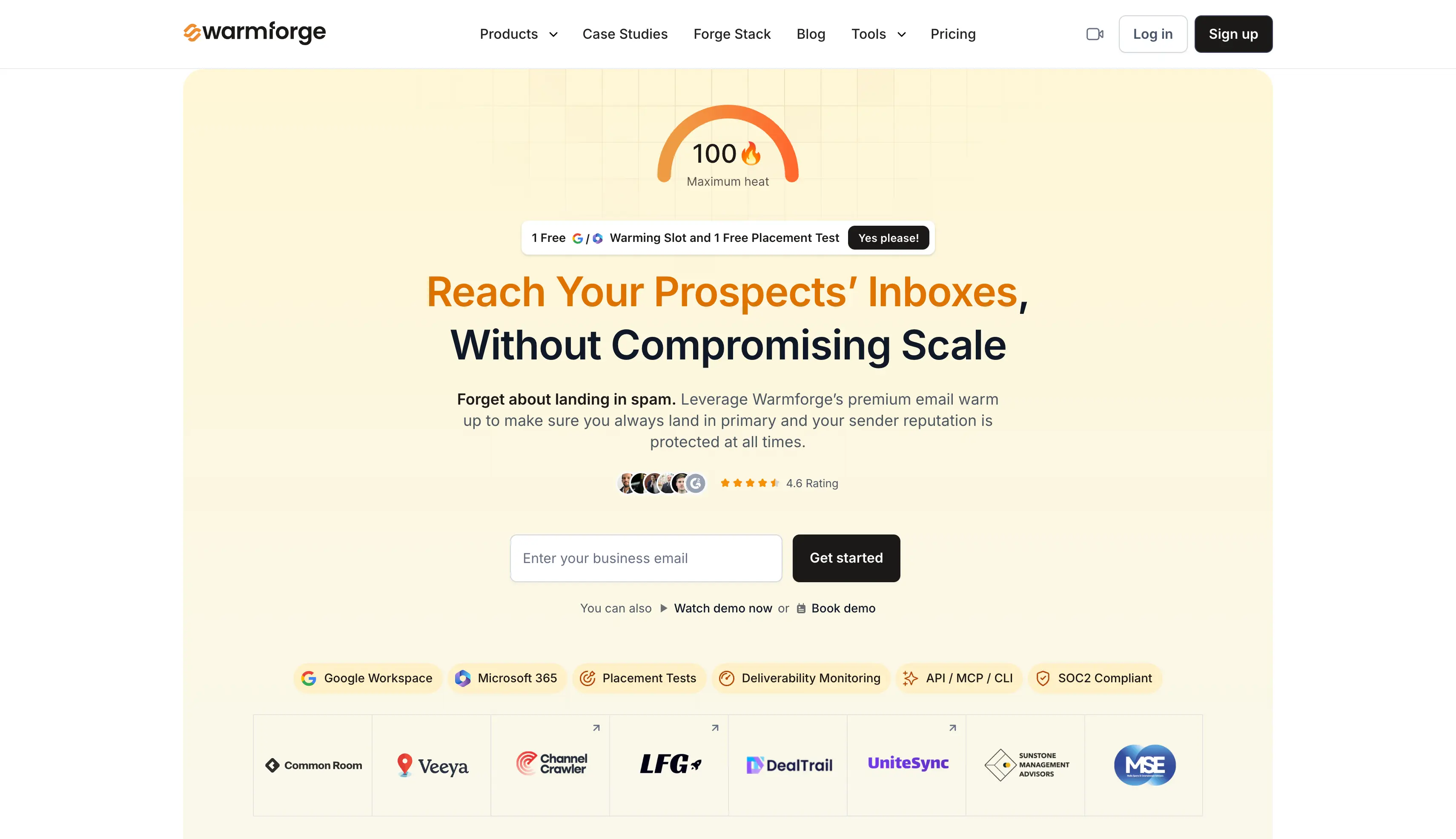
You run a placement test, and Warmforge sends your email to seed inboxes at Google, Outlook, and other major inbox providers. That report shows if it landed in the primary inbox, the promotions tab, or the spam folder.

In my testing, I ran a placement test before a 3,000-contact send and caught the template landing in promotions on Gmail. I removed two links and a tracking pixel, retested, and it landed in primary.

Key Features

  • Inbox Placement Tests: Send your real email to seed inboxes across Google, Outlook, and other major inbox providers, and see if it lands in the primary inbox, the promotions tab, or spam.
  • Health Checks: Automatic email health monitoring across DNS records, MX records, and blacklist status on every mailbox, with alerts on any spam risk.
  • Heat Score™: Every mailbox gets a reputation score that shows when it's safe to scale volume. I wait for a Heat Score™ of 85 before I launch.
  • One-Click AI Warmup: Connect a mailbox and click once. AI-written emails mimic real human conversation.
  • Multilingual Warmup: Warmup emails run in multiple languages, so your activity looks natural to inbox providers outside the US.
  • Premium Warmup Pool: Run your warmup through aged mailboxes only.
  • Works With Any Mailbox: Google Workspace, Microsoft 365, and IMAP or SMTP mailboxes from Mailforge or Infraforge.
  • MCP, CLI, and API: Run warmup and placement tests from Claude, Cursor, or your own agents through the Forge MCP server.
  • Free With Salesforge: Unlimited warmup slots at no extra cost on every Salesforge plan.

Warmforge Pricing

Plan Price What's included
Free slot $0 1 warmup slot and 1 free placement test a month
Email Warm Up $9 per slot/month billed annually, or $10 billed quarterly Automated AI warmup, 1 free placement test a month, Health Checks on DNS and MX records and blacklist status
Placement Test Pro $32.50/month billed annually, or $39 monthly 100 tests a month, 50 mailboxes per test
Placement Test Growth $140.80/month billed annually, or $169 monthly Unlimited tests, 250 mailboxes per test

Annual billing takes 10% off, and the Growth plan gives you two months free.

The one limitation I'd flag: each slot includes 1 free placement test a month. I test before every campaign, so I'm on a Placement Test plan. If you only spot-check occasionally, the free allowance covers you.

You can create a free Warmforge slot here and run your first placement test today.

2. GlockApps

G2 Rating: 4.2 out of 5

Best for: Marketing teams and agencies that need placement advanced reports with other deliverability metrics.

The next tool on my list is GlockApps. It is an email deliverability tester, and one of the oldest names in inbox placement testing.

You send your email to their seed list. Its report shows where it landed at every provider: Gmail, Outlook, Yahoo, and dozens more.
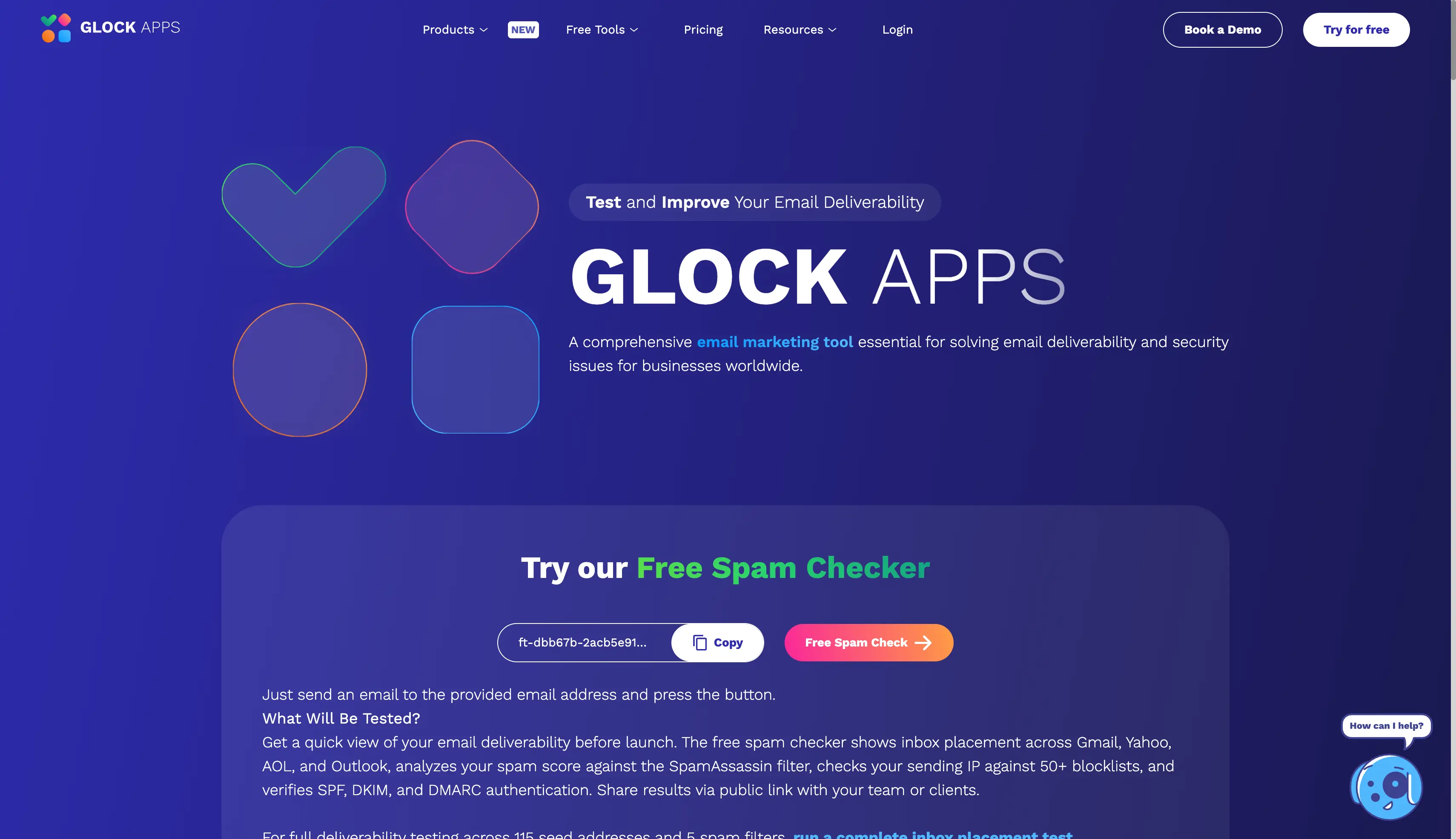
In my testing, the Gmail tab prediction stood out. It told me my HTML-heavy template would land in the promotions tab before I sent anything real.

But know this before you buy. GlockApps finds your inbox placement issues, and it stops there. There's no warmup, no infrastructure, and no sending, so you need other tools to fix what it finds.

Also watch the credit system. Unused test credits expire at the end of each month with no rollover.

Best For

Key Features

  • Per-Provider Placement Reports: One test covers Gmail, Outlook, Yahoo, and dozens of other providers.
  • Gmail Tab Prediction: See if you'll land in primary, promotions, or spam before a real send.
  • DMARC Analytics: Track authentication results across your sending domains.
  • IP Reputation and Blacklist Monitoring: Watch your sending IPs and get alerts on listings.
  • Uptime Monitor: Track whether your sending domains and servers stay reachable.
  • Free Checker Tools: SPF, DKIM, DMARC, MX, TXT, and BIMI checkers you can use without a plan.
  • Shareable Reports: Agencies can send the reports to clients without any editing.

GlockApps Pricing

Plan Price What's included
Free $0 2 spam test credits, 1 sending account
Essential $59/month billed annually 360 test credits, 1 sending account
Growth $99/month billed annually 1,080 test credits, 10 sending accounts, 5 users
Enterprise $129/month billed annually 1,800 test credits, 20 sending accounts
Credits Pack 1 $16.99 3 spam test credits
Credits Pack 2 $47.99 10 spam test credits
Credits Pack 3 $75.99 20 spam test credits

Custom plans are available for high-volume senders.

3. Mail-Tester

G2 Rating: NA

Best for: Solo senders and small teams who want a free content and authentication check before a one-off send.

The next tool is Mail-Tester, and it's the one most people try first. You send a test email to a unique address, refresh the page, and see your score out of 10. The whole thing takes under a minute, and you don't need an account.

Its report covers your SpamAssassin score, your SPF, DKIM, and DMARC setup, blacklist status, and broken links.
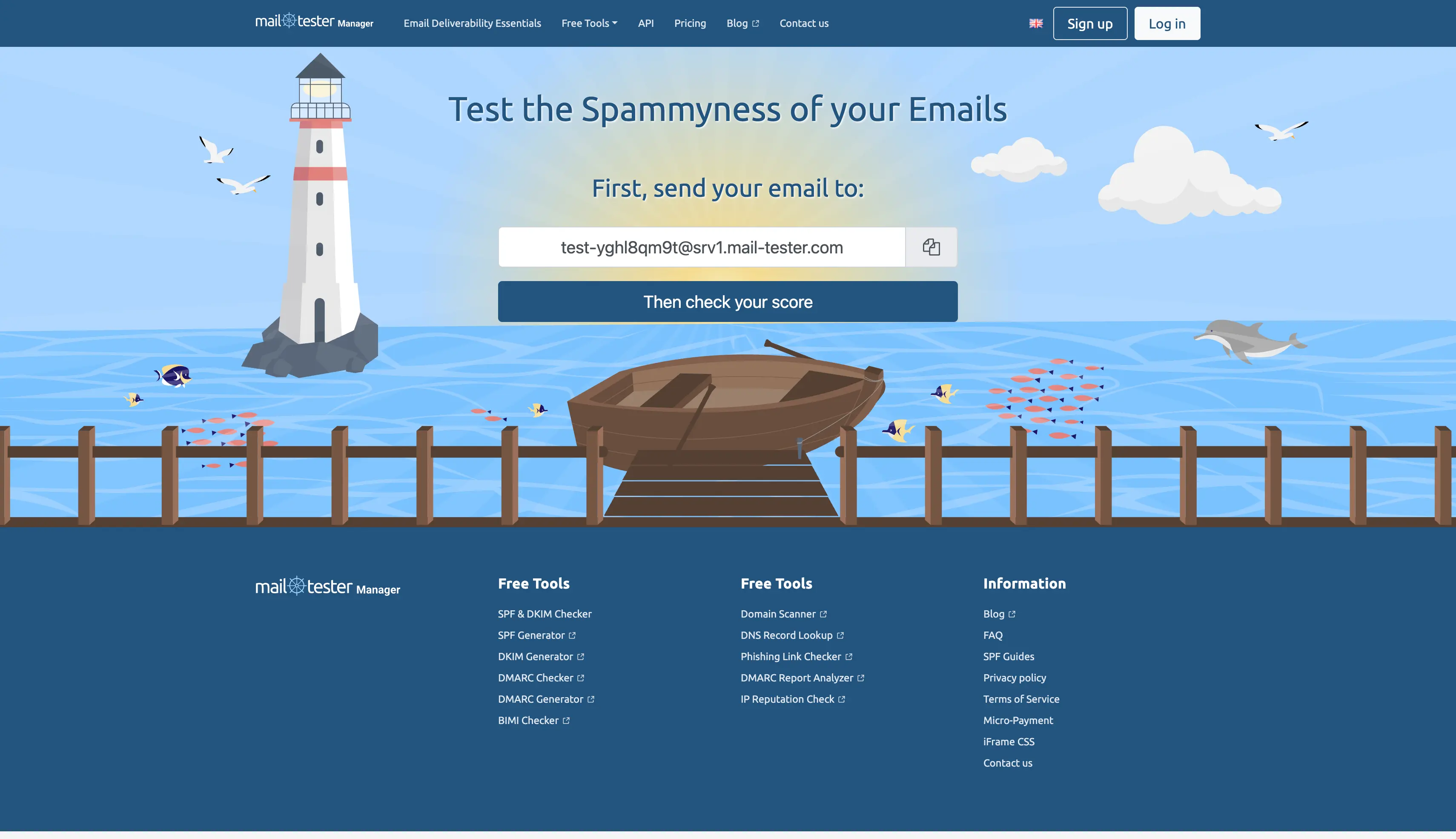
When I misconfigured authentication on a new domain, Mail-Tester caught it faster than anything else here.

But a high score is not placement. In my testing, an email scored 9 out of 10 on Mail-Tester and still landed in spam, because placement depends on sender reputation, not just content. A high score means your email looks clean. It doesn't mean Gmail will show it in the primary inbox.

One more thing: free test results stay visible to anyone with the test URL for 7 days.

Key Features

  • Instant Spam Score: Send an email to the test address and get a score out of 10 in under a minute, no signup.
  • SpamAssassin Breakdown: A rule-by-rule report showing which rules your email triggered and why.
  • Authentication Checks: SPF, DKIM, and DMARC verified on every test.
  • Blacklist and Link Checks: Spots blacklist listings and broken links in the same report.
  • JSON API and iFrame: Paid accounts can pull Mail-Tester results into their own app.
  • White Label: Rebrand the service as your own on a paid account.
  • 30-Day Test History: Paid accounts keep every test from the last 30 days, with no ads on reports.

Mail-Tester Pricing

Plan Price Price per test
Free web interface $0 3 tests a day, no account needed
50 tests a month $10/month $0.20
500 tests a month $25/month $0.05
2,000 tests a month $80/month $0.04
7,500 tests a month $250/month $0.033

One-time payment options are also available if you don't want a subscription.

4. MailReach

G2 Rating: 4.7 out of 5

Best for: Cold email teams and solo senders who want warmup and spam testing from one vendor.

The next tool on my list is MailReach. It is a warmup tool with a spam tester built in. That makes it the closest thing to Warmforge on this list.

Its spam test works the same way. Your email goes to a network of real inboxes, and you see where it lands at each provider.
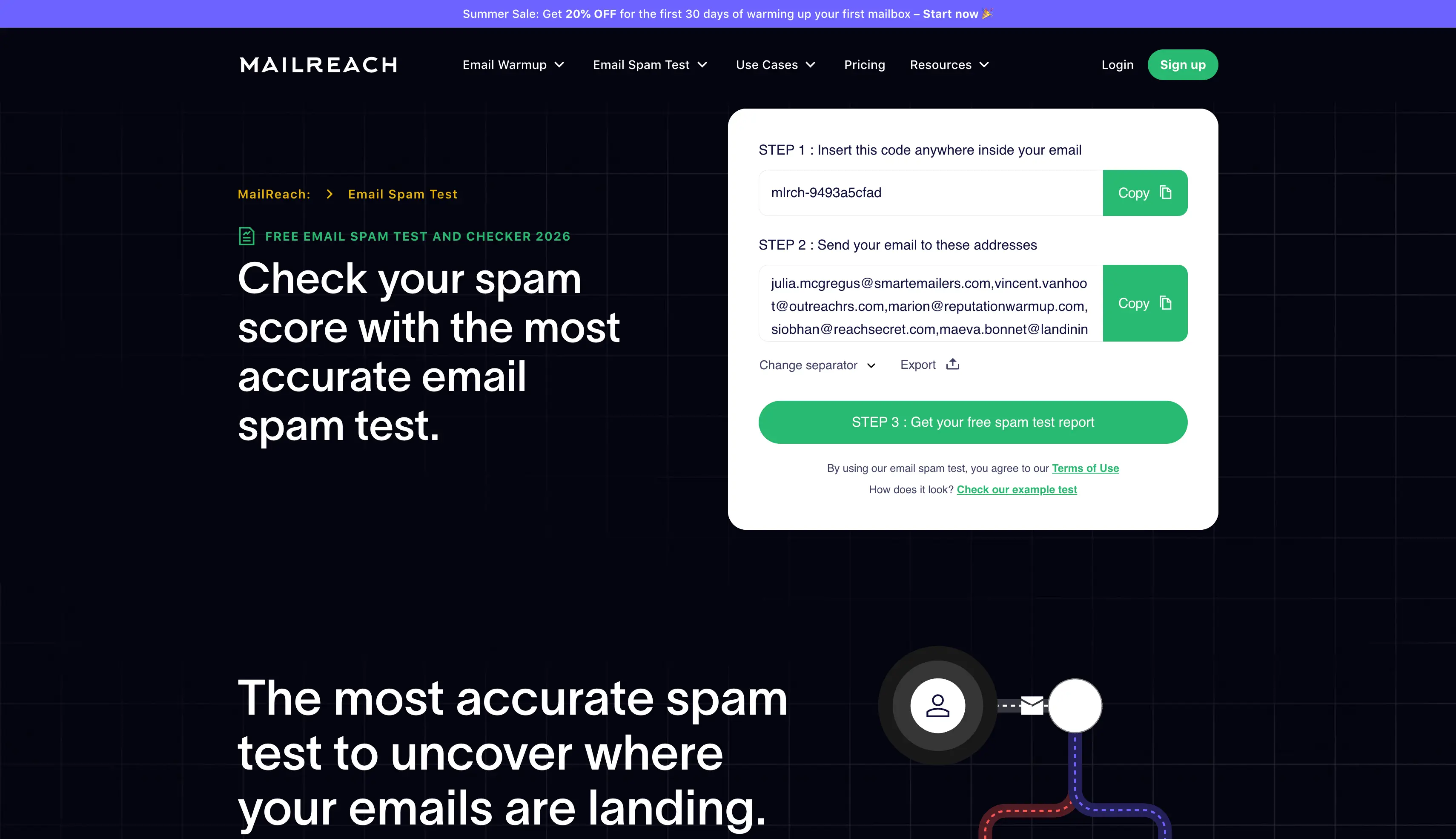
You can buy the spam tester on its own, or take the All-In-One plan that bundles it with the email warmer.

In my testing, the placement test was accurate and the deliverability report was easy to read. The checks that come with it are thorough too, covering reverse DNS, blacklists, links, and spam words.

The catch is the cost per test. MailReach sells spam tests as credits, and 300 credits cost $175.50. That works out to about $0.59 per test, against $0.33 per test on Warmforge's Placement Test Pro plan.

Key Features

  • Inbox Placement View by Provider: See exactly where your email lands at each inbox provider.
  • Automatic Spam Tests With Alerts: Schedule tests and get results in Slack or through webhooks.
  • Seed List Rotation: The seed addresses rotate, so your results stay accurate over time.
  • Reverse DNS Checker: Confirms your sending IP resolves correctly.
  • SPF, DKIM, and DMARC Checker: Checks all three authentication records in one pass.
  • Email Blacklist and Links Checker: Flags blacklist listings and broken or risky links.
  • Spam Words Checker: Highlights the wording that filters penalize.
  • AI Email Warmup: Warms your mailboxes through a network of real inboxes on the All-In-One plan.

MailReach Pricing

Plan Price What's included
Spam Tester (pay as you go) $175.50 for 300 credits About $0.59 per test, credits from 20 up to 10,000+
All-In-One Monthly plan Email warmer plus the spam tester in one subscription

5. MailGenius

G2 Rating: 4.6 out of 5

Best for: Marketers who want an audit that explains every problem it finds and how to fix it.

The next tool is MailGenius. It is a content and authentication audit tool. You paste or send your email, and it scans for spam trigger words, authentication problems, and technical issues that hurt inbox placement.

I like the way it explains things. You don't just get a score. You get a list of specific problems, each with a fix in plain language.
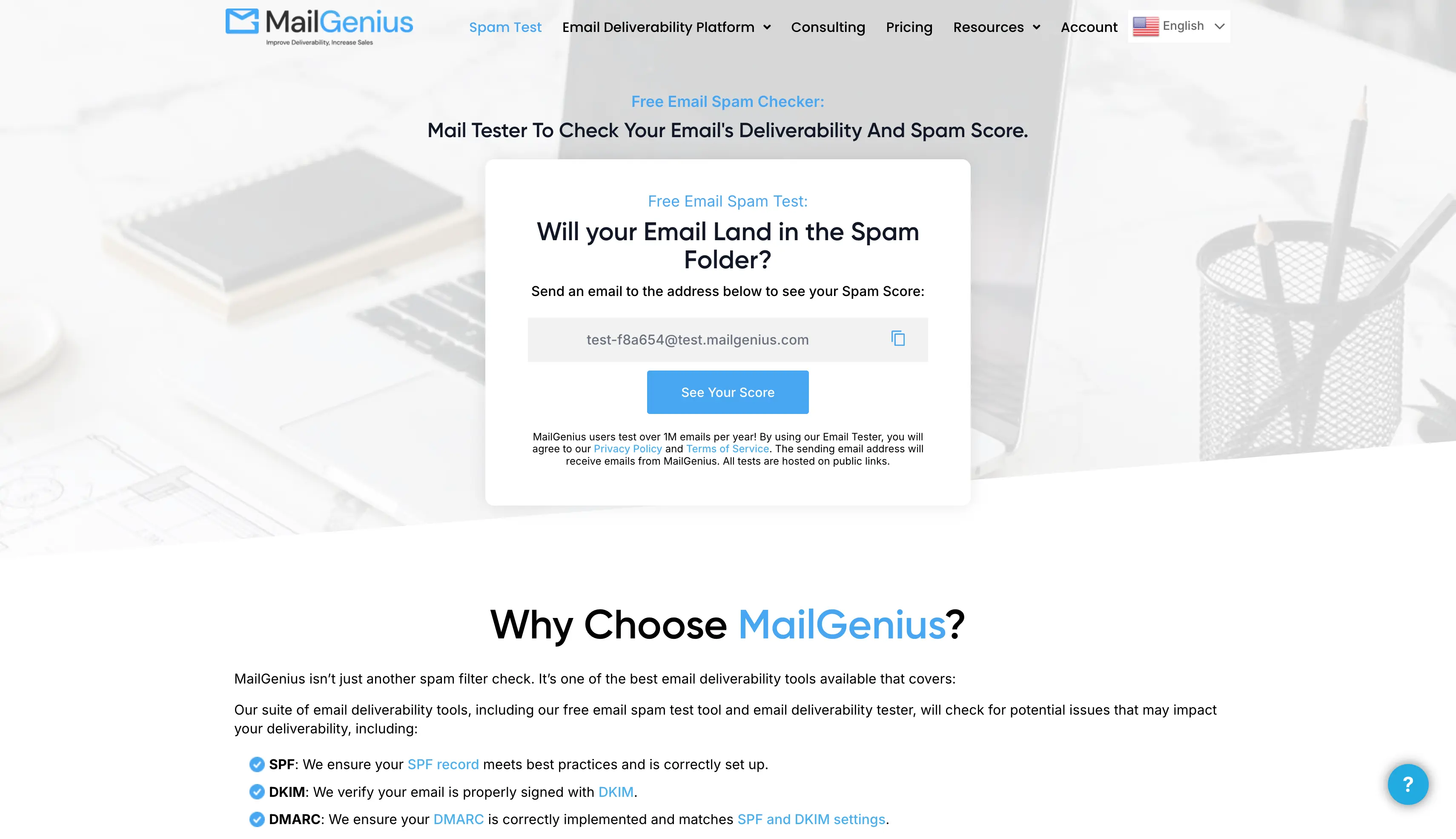
If you're new to deliverability, those explanations are worth more than the score.

Its AI consultant goes a step further and rewrites your copy, which none of the other content checkers here do.

The spam test is free to run. Paid plans start at $23 a month and go up to automatic testing on every email you send.

Key Features

  • Spam Trigger Scan: Flags the spam trigger words and patterns in your email copy that filters penalize.
  • Authentication Audit: Checks your SPF, DKIM, and DMARC records and the technical setup behind your sending domain.
  • AI Deliverability Consultant: Explains every finding and tells you how to fix it.
  • AI Copywriting Analysis and Rewrite: Rewrites the parts of your copy that trigger filters.
  • Competitor Email Testing: Run the same tests on your competitors' or prospects' emails from the Genius plan.
  • Automatic Blacklist Monitoring: Alerts across unlimited domains on the top plan.
  • Automatic Email Testing: The top plan tests every email you send without you starting a test.

MailGenius Pricing

Plan Price What's included
Spam test Free Run a deliverability test without a plan
Beginner $23/month billed yearly 60 email tests a month, AI consultant, AI copywriting analysis and rewrite
Genius $39/month billed yearly Unlimited email tests, plus testing competitors' and prospects' emails
Automatic Testing and Domain Monitoring $79/month billed yearly Unlimited tests with every email tested automatically, blacklist monitoring for unlimited domains

6. Unspam

G2 Rating: 4.8 out of 5

Best for: Cold emailers and newsletter senders who want a free spam score and a design check in one place.

The next tool is Unspam. It is a free spam checker that runs an email spam test in about 30 seconds. It checks your SPF, DKIM, and DMARC records and your blacklist status.
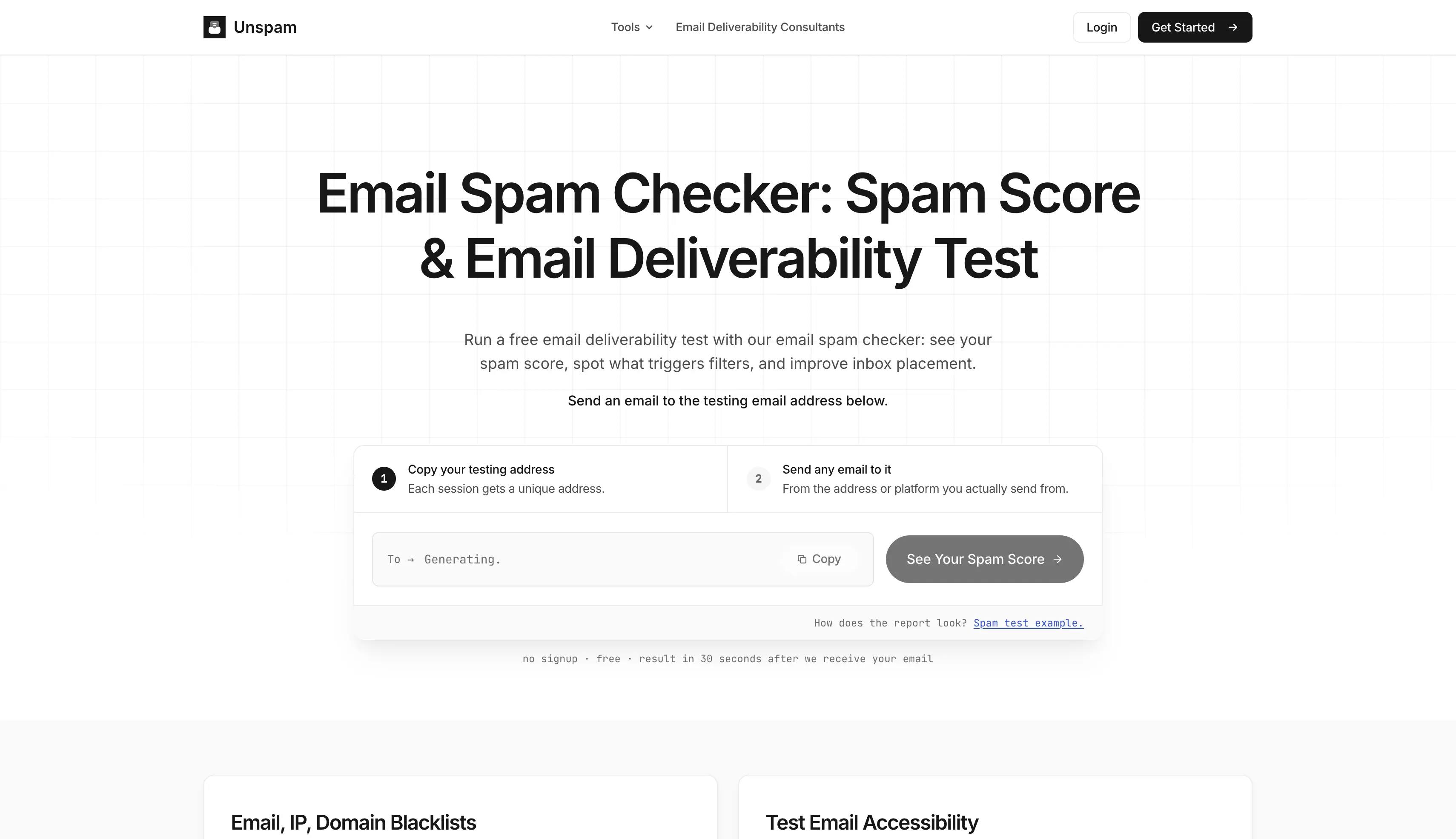
It adds two things no other tool here offers. An AI eye-tracking heatmap predicts where readers will look in your email, and email client previews show how it renders across 50+ real clients and devices.

Its free tier is the most generous on this list. You get 10 spam tests, 3 inbox placement tests, 10 email previews, and 10 heatmaps a month, with no card. Your results stay private, unlike Mail-Tester's public test URLs.

The heatmap helps on design-heavy emails. For plain-text cold email, it doesn't add much.

Key Features

  • 30-Second Spam Test: Score plus SPF, DKIM, DMARC, and blacklist checks in one report.
  • Inbox Placement Tests: See where your email lands, included from the free plan.
  • AI Eye-Tracking Heatmap: Predicts where readers will look in your email design.
  • Email and Device Previews: See how your email renders across 50+ real clients and devices.
  • AI Assistant: Explains your results and suggests fixes.
  • MCP Server Access: Run tests from Claude, Cursor, or your own agents on any paid plan.
  • Unlimited Sender Accounts: Connect every mailbox you send from, even on the free plan.
  • Historical Results: Paid plans keep your past tests so you can track changes over time.

Unspam Pricing

Plan Price What's included
Free $0 10 spam tests, 3 inbox placement tests, 10 email previews, 3 device previews, 10 heatmaps a month
Basic $9/month 50 spam tests, 10 placement tests, 50 previews, historical results, MCP server access
Business $19/month 200 spam tests, 50 placement tests, 200 previews, 50 heatmaps
Agency $29/month 500 spam tests, 250 placement tests, 500 previews, 250 heatmaps
White Label Custom API access with limits sized to your contract

Annual billing gives you two months free, and every paid plan has a 14-day refund.

7. Postmark Spam Check

G2 Rating: 4.6 out of 5

Best for: Developers who want free, unlimited spam scoring through a web page or an API.

Postmark Spam Check is the simplest tool on this list. You paste your raw email and get a SpamAssassin score with a rule-by-rule breakdown. That's it.

It's free, it has no test limits, and it has an API. Developers can add spam scoring to a build pipeline or a pre-send check. I keep it bookmarked for quick checks.
There's no placement data, no monitoring, and no account. It does one job instantly and charges nothing.

Postmark also sells a transactional email platform, which is a separate product with its own plans.

Key Features

  • SpamAssassin Score: Paste your raw email and get the industry-standard score instantly.
  • Rule-by-Rule Breakdown: See exactly which rules fired and how many points each one cost you.
  • Free API: Add spam scoring to a build pipeline or pre-send check.
  • No Test Limits: Run as many checks as you want.
  • No Account Needed: No signup, no card, no cost.

Postmark Spam Check Pricing

Plan Price What's included
Spam Check tool Free Unlimited tests, API access, no account
Postmark sending (Free) $0/month 100 emails a month, for testing your integration
Postmark sending (Basic) $15/month 10,000 emails a month, 45-day activity retention
Postmark sending (Pro) $16.50/month Adds 365-day retention and 10 custom sending domains

DMARC monitoring is an add-on from $14 per domain per month.

8. Folderly

G2 Rating: 4.8 out of 5

Best for: Sales and marketing teams that want a team to manage their deliverability for them.

Folderly is two tools under one name. The first is a free AI spam words checker. You paste your subject line and body, and it flags risky wording before you send. The second is a paid email deliverability platform where Folderly's team also manages your deliverability for you.
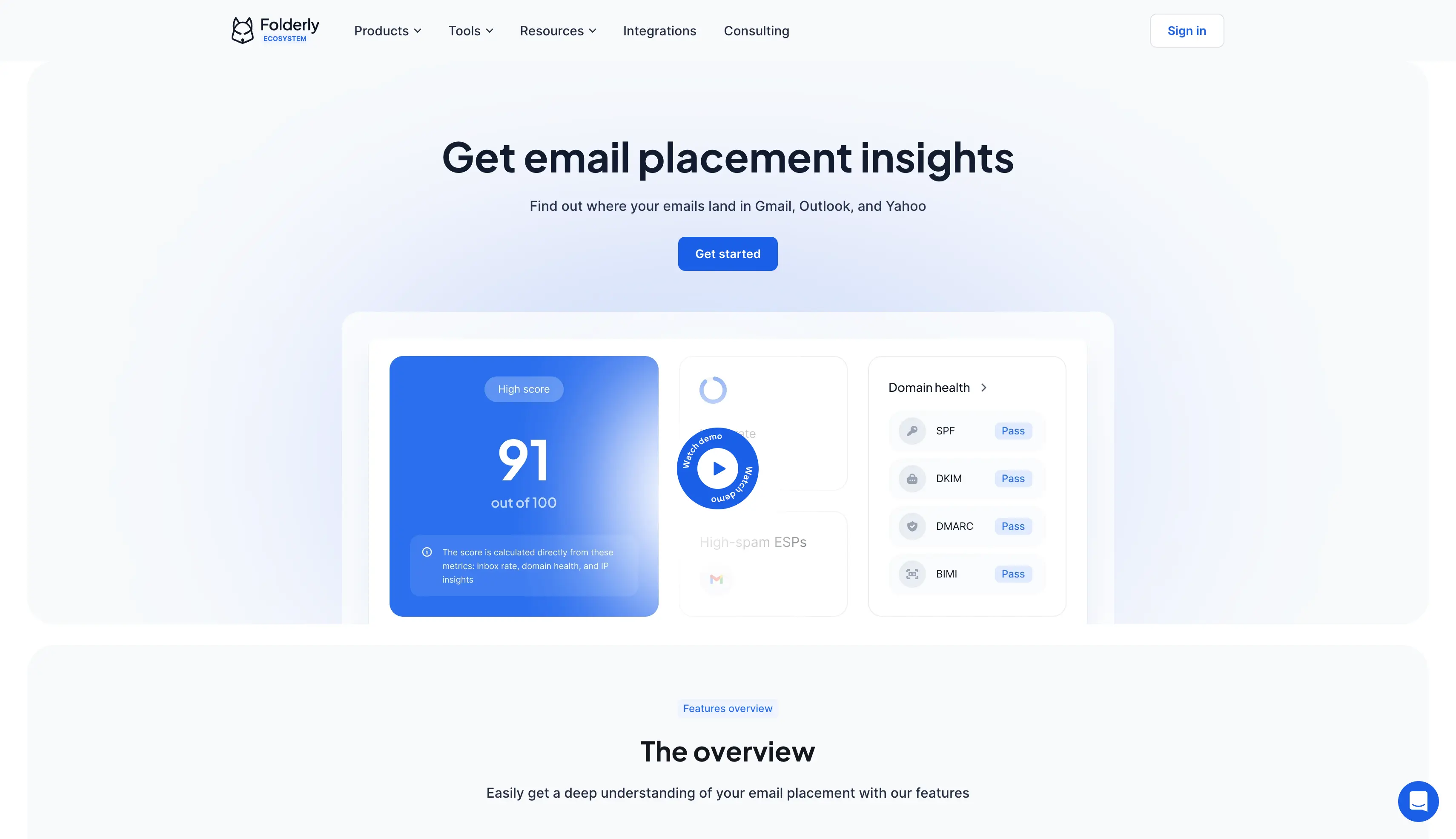
Its free checker is a good first stop for content checks. It also gives away Pulse, which sends real-time spam placement alerts by email, Slack, and SMS at no cost.

The platform is a bigger commitment. At $96 per mailbox per month, it only makes sense if you want a team actively working on your deliverability.

Placement testing is a separate product called Inbox Insights, with a free tier of 2 tests a month.

Key Features

  • Free Spam Words Checker: Paste your subject line and body, and it flags risky wording before you send.
  • Inbox Insights: Check your email placement, IPs, and DNS records before you launch a campaign.
  • Pulse: Free real-time spam placement alerts by email, Slack, and SMS.
  • Deliverability Platform: Paid monitoring and sender reputation maintenance across your mailboxes.
  • Managed Service: Folderly's team manages your deliverability for you.
  • Free Generators: SPF and DMARC record generators you can use without a plan.

Folderly Pricing

Plan Price What's included
Spam words checker Free Subject line and body check
Pulse Free Real-time spam placement alerts by email, Slack, and SMS
Folderly platform $96 per mailbox/month billed yearly Sender reputation maintenance and deliverability monitoring
Inbox Insights Free $0 2 placement tests a month
Inbox Insights Monthly $79/month 100 placement tests a month
Inbox Insights Yearly $799/year 100 placement tests a month, saves 15%

9. Mailtrap

G2 Rating: 4.8 out of 5

Best for: Dev teams testing transactional emails in staging before they go to production.

The next tool is Mailtrap. It is an email sandbox for developers with spam analysis built in. Your test emails go to a fake SMTP environment instead of real inboxes, so password resets and receipts never reach a customer while you're still building.
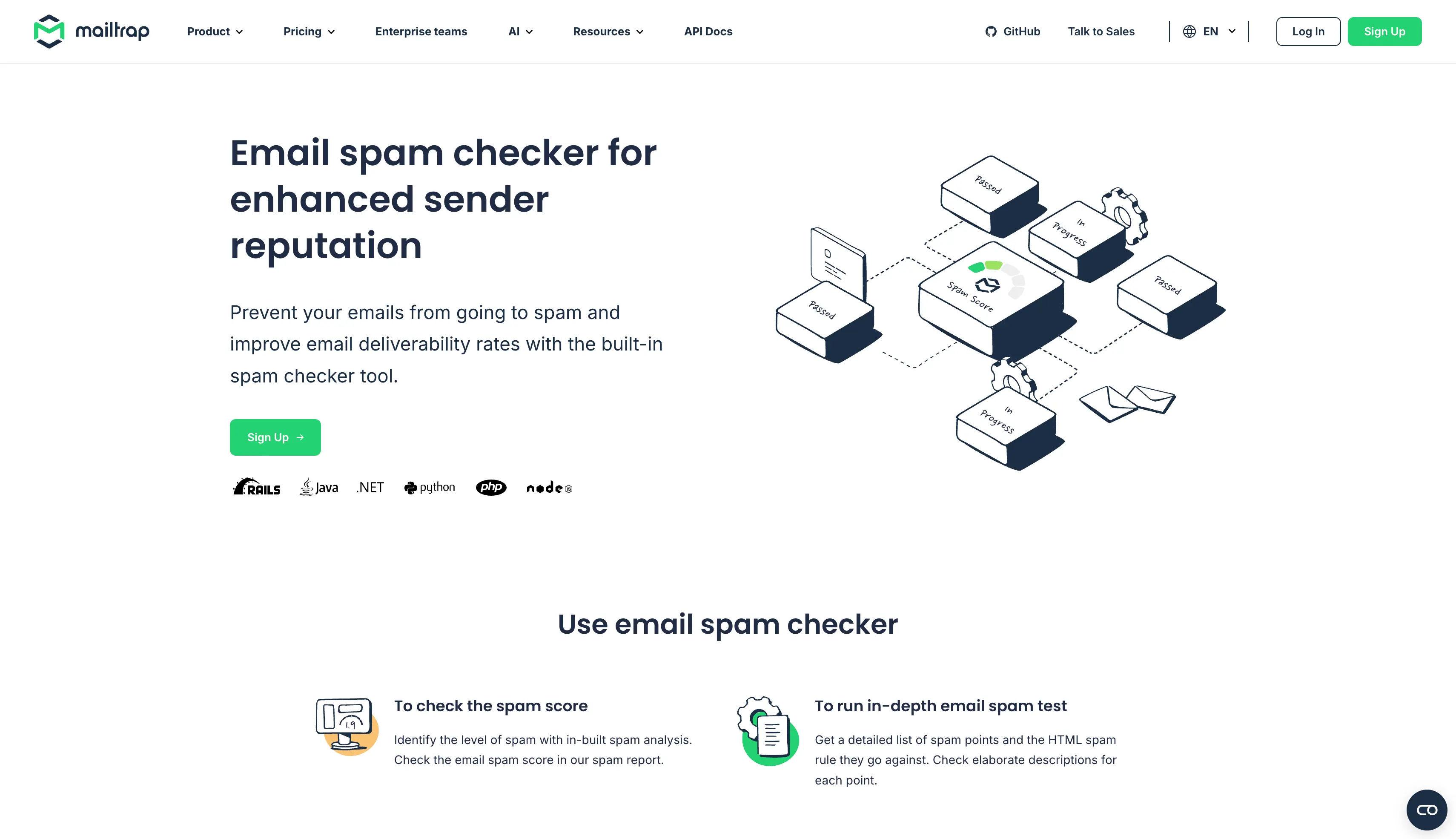
Along with the spam score, you get an HTML checker and client previews. It's a development tool, not a marketing tool.

If you send cold email, this isn't for you. If you build products that send emails, it probably is.

Key Features

  • Email Sandbox: Test emails go to a fake SMTP environment, so nothing reaches a real customer by accident.
  • Spam Analysis: SpamAssassin-powered scoring on every test email.
  • HTML Checker: Catches broken markup before it renders badly in a real inbox.
  • Multiple Sandboxes: Separate environments per project or release stage.
  • Email Forwarding: Forward selected test emails to a real address when you need to.
  • Sandbox API and QA Automation: Wire the sandbox into your automated test suite.

Mailtrap Pricing

Plan Price What's included
Free $0/month 50 test emails, 1 user, 1 sandbox
Basic $17/month 500 test emails, 3 users, 100 forwarded emails a month
Team $42/month 5,000 test emails, 5 users, 5 sandboxes, priority support
Business $123/month 50,000 test emails, 50 users, 50 sandboxes
Enterprise $498/month Unlimited test emails, unlimited users, 300 sandboxes, SSO

Annual billing saves up to 20%. These are Email Sandbox prices, and Mailtrap's sending product bills separately.

10. Litmus

G2 Rating: 4.5 out of 5

Best for: Marketing teams that ship design-heavy email every week and need full QA, not just a spam check.

The last tool on my list is Litmus. It is an email QA suite for email marketing teams. It works with any email marketing platform and checks marketing emails before they go out. Spam testing is one feature next to rendering previews across 100+ clients, collaboration tools, and analytics.
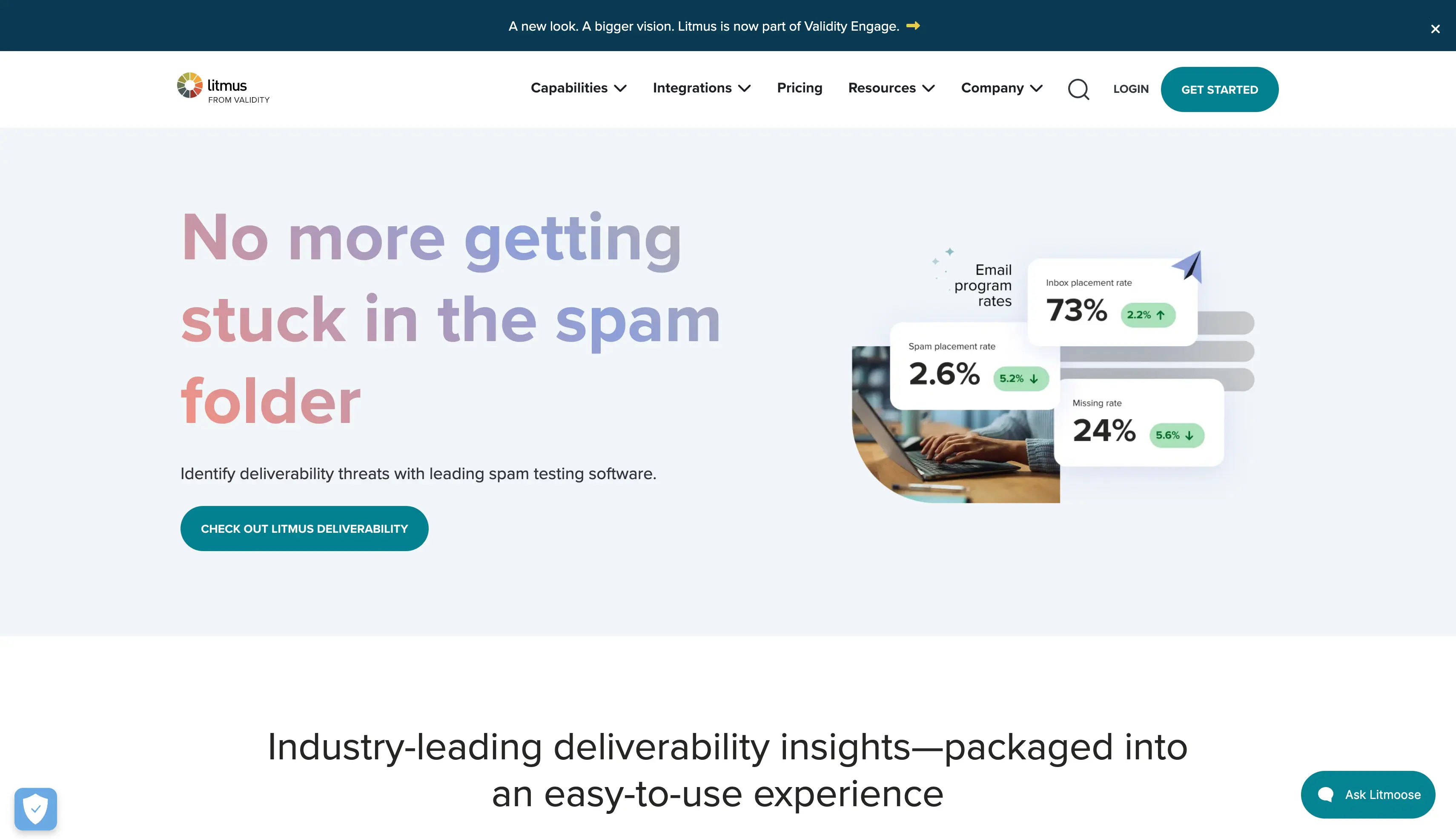
Its previews are the best in the business. If your team ships design-heavy campaigns every week, the QA workflow is worth paying for.

Litmus doesn't publish its prices. You request a quote, which tells you who it's built for. If you only need a spam check, everything else on this list costs less and takes less time to buy.

Key Features

  • Rendering Previews: See your email across 100+ clients and devices before sending.
  • Spam Testing: Runs filter checks inside the same QA workflow.
  • Litmus Builder: Write and edit email code with live previews as you go.
  • Proof: Review, comment, and approve emails as a team in one place.
  • Accessibility Checks: Flags the issues that make an email hard to read on assistive tech.
  • Email Analytics: Track email performance beyond opens and clicks.

Litmus Pricing

Plan Price What's included
All plans Custom quote Contact the sales team for pricing
Trial Free Time-limited access, no free plan afterwards

The 3 Types of Spam Checkers (Pick the Right One First)

Most "best spam checker" lists mix three different tool types without telling you. Here's the split.

  • Content checkers score your subject lines, copy, and authentication before you send. Fast and often free, but a good score won't tell you where the email lands.
  • Inbox placement testers send your real email to seed inboxes and show where it lands: primary, promotions, or spam.
  • Ongoing monitors watch your domain health, blacklist status, and sending reputation over time.

I ran tests on every tool here, read through their reports, and checked what cold email communities say about each one.

How to Use an Email Spam Checker (3 Steps)

Here's the process, whichever tool you pick.

  1. Copy the test address: Open your spam checker and grab the unique test email address it gives you, or connect your mailbox for a placement test.
  2. Send your actual draft: Send the real campaign email from the real sending mailbox. If you send a different email or use a different mailbox, the result won't match your real campaign.
  3. Read the placement, then fix and retest: Check where the email landed and what the report flagged. Fix the issues, run the test again, and only launch once it lands where you want.

One thing content checkers won't tell you: placement depends on your sender reputation as much as your copy. That's why I run a placement test through Warmforge before every campaign instead of trusting a content score.

The score checks the email. The placement test checks the email, the mailbox, and the domain together. Fixing what each report flags is how you improve email deliverability over time, not just pass one test.

Which Email Spam Checker Should You Pick?

So far, you've read about ten top email spam checker tools. As you can see, each one is good at a different part of the job.

If the question is which tool I'd run before my next campaign tomorrow, the answer is Warmforge. It shows where emails land instead of guessing from your copy. Health Checks watch DNS, MX, and blacklist status in the background. And warmup fixes the sender reputation that put you in spam, which nothing else here even tries to do.

That's the obvious pick.

One tool. One bill. Placement, monitoring, and warmup in the same place. And if you already run Salesforge, it's included with unlimited slots.

The free slot and free placement test cost nothing and test these claims against a real campaign. A better use of ten minutes than reading another "best of" article.

FAQs About Email Spam Checker Tools

1. What is the best email spam checker?

Warmforge is the best email spam checker for cold email senders in 2026. It combines Inbox Placement Tests, Health Checks on DNS, MX, and blacklists, and Heat Score™ reputation tracking with the warmup that fixes the underlying problem. Mail-Tester is the best free option for quick content checks.

2. Is there a way to check if an email is spam?

Yes, two ways. A content checker like Mail-Tester scores your email content against spam filters before you send. An inbox placement test like Warmforge's goes further to test deliverability for real: it sends your email to seed inboxes and shows whether it lands in primary, promotions, or spam at each provider.

3. Is there a free email spam checker available?

Yes, several. Mail-Tester gives you 3 free tests a day, Postmark Spam Check is free with no limits, Unspam includes 10 free spam tests and 3 placement tests a month, and Warmforge includes 1 free warmup slot with a free placement test every month on signup.

4. How can I check if my email is on a spam list?

Run a blacklist check. Warmforge's Health Checks monitor blacklist status automatically on every connected mailbox and alert you when a listing appears. Mail-Tester, MailReach, and GlockApps also include blacklist checks in their reports. If you find a listing, most blacklists have a delisting request process on their site.

5. What's the difference between a spam score and inbox placement?

A spam score rates your email content and setup against filter rules. Inbox placement is where the email actually lands, which also depends on your sender reputation, sending IP, reverse DNS, domain age, and volume patterns. An email can score 9 out of 10 on content and still land in spam. Placement tests measure the real outcome.

6. How often should I run a spam test?

Run a placement test before your next campaign goes live, whenever you change a template, and weekly if you send at volume. Reputation shifts over time, so a template that landed in the primary inbox last month can start landing in the promotions tab. Continuous monitoring through Health Checks covers you between tests.